
Best Fireplace for Power Cuts: A 2026 South African Guide

The best fireplace for load shedding isn’t necessarily the one with the most impressive flame or the simplest controls. It’s the one that can deliver the warmth you need when the power goes out. Look beyond the fuel type and check whether essential ignition, controls or heat-distribution features rely on electricity.
It’s understandable to want a fireplace that brings comfort during a power cut without sacrificing everyday convenience. This guide compares fireplace options by their electricity requirements, heat and day-to-day operation, so you can weigh what to expect during an outage against how you’ll use the fireplace the rest of the time.
We’ll look at wood-burning, gas, pellet, bioethanol and electric fireplaces, including where backup power may matter and how each option could suit your room and routine. With the right match, a welcoming hearth can be more than a beautiful centrepiece: it can help keep home life cosy when the grid is unavailable.
Key Takeaways
- The best fireplace for load shedding depends on whether essential ignition, controls, fans or fuel-feed systems need mains electricity.
- Compare wood-burning, gas, pellet and bioethanol fireplaces by outage readiness, operating effort and the role you want them to play in your home.
- Gas fuel alone doesn’t guarantee a fireplace will work during a power cut. Model-specific electricity requirements matter.
- Use a selection checklist to weigh your heating needs, room layout, fuel preference, daily routine and installation plans.
- Compare built-in, freestanding, pellet, gas and bioethanol fireplace options with your home’s comfort and power resilience in mind.
What makes a fireplace a good choice for load shedding?
A fireplace is outage-ready when it can perform its essential job, producing heat, without depending on mains electricity. The distinction lies in how it starts and operates, not simply whether it burns wood, gas or another fuel. A fireplace may still produce a flame during a power cut but lose powered features that help control or circulate its heat.
A grid-independent fireplace can be started and provide heat without mains electricity; a backup-supported fireplace needs a battery, inverter or generator to power essential components. Fuel supply matters too: a fireplace that works without the grid still needs its fuel to be available. And outage resilience is not the same as whole-home heating. A fireplace may warm the room it’s in without evenly heating every space in the house.
Which fireplace functions may need electricity?
Check each electrical component and what it does. An electronic ignition system may need power to light the flame, while a blower or fan may help move warm air around the room. Powered controls can affect how the fire starts or how you adjust it. In a pellet fireplace, an electric feed mechanism may be needed to deliver pellets to the burn chamber, so suitable backup power could be essential for operation.
Some designs allow manual lighting or operation, while others depend on powered components. Don’t assume every gas fireplace works during load shedding, or that every model in another fuel category behaves the same way. Read the model-specific operating information and check which functions need electricity, whether the fireplace can be lit without it, and what features will remain available.
For context on how a traditional wood-burning stove produces heat, Wikipedia provides an overview of its operation and history. For your home, the practical question is which components the particular fireplace needs to run.
What kind of warmth does your household need?
Decide whether you want dependable warmth in a frequently used room, supplementary heat alongside another system, or the gentle glow and atmosphere of a fire. These are different needs, and outage readiness alone won’t tell you whether a fireplace can heat the space comfortably.
Consider room size, layout, insulation and how you use the space. An open-plan area may distribute warmth differently from a smaller, enclosed lounge. A fireplace used occasionally for ambience has a different job from one expected to provide regular heat. The closed-combustion fireplace heat output guide can help you consider heat output alongside your room’s needs. Once you understand both the electrical requirements and the heating purpose, you can choose the best fireplace for load shedding with more confidence.
Four fireplace types to consider for load shedding
The best fireplace for load shedding depends on more than its fuel. Consider how it starts, what keeps it running and the warmth you expect, then compare those requirements with your household routine. These four fireplace types offer different balances of independence, convenience and heating purpose.
| Type | Electricity dependence | Operating considerations | May suit |
|---|---|---|---|
| Wood-burning | May operate without mains power if its essential functions are manual | Requires hands-on fuel management; powered fans, if fitted, may not work during an outage | Households comfortable tending a fire and handling wood |
| Gas | Depends on the model’s ignition and controls | Fuel may be convenient to use, but check which functions need electricity | Those seeking a managed flame and straightforward daily operation |
| Pellet | Feed mechanisms and fans may need electricity | Backup power may support operation, but isn’t a universal included feature | Households prepared to plan for powered components |
| Bioethanol | Depends on the model’s essential operation | Consider its intended heating role and fuel handling | Those prioritising ambience or supplementary warmth |
Wood-burning and gas fireplaces during an outage
A wood-burning fireplace may continue producing heat without mains electricity if it can be lit and operated manually. That independence comes with a hands-on routine: you’ll need to tend the fire and manage fuel. For an overview of how this familiar heating option works, see this guide to the wood-burning stove.
Gas can offer a more controlled, convenient experience, but ignition and controls vary by model. A gas fuel supply alone doesn’t guarantee the fireplace will work during load shedding. Check the model’s instructions against your priorities. Would you rather avoid actively tending a fire, or are you comfortable managing wood in exchange for potential independence from powered features?
Pellet and bioethanol fireplaces: useful distinctions
Pellet fireplaces can rely on electricity to feed pellets into the fire or run a fan. Without power for those parts, a model may not operate as intended. A battery, inverter or generator could provide support, but backup power isn’t automatically part of the fireplace. Check which components are essential and what the manufacturer specifies for outage operation.
Bioethanol fireplaces can suit an atmospheric setting, but don’t assume they can replace a primary heating system. Their suitability depends on the model and intended use. Whichever type you choose, include safe outage preparations in your plans. Ready.gov’s power-outage safety guidance also covers hazards such as carbon monoxide and generator use.
To compare options with your room and routine in mind, explore Decor Fires’ indoor fireplace options.
Is a gas fireplace always the best fireplace for load shedding?
No. Gas may offer convenient operation, but the fuel alone can’t tell you whether a fireplace will work during a power cut. Ignition, controls and other essential components vary by model. The best fireplace for load shedding is the one whose outage performance matches your household’s needs, not simply a particular fuel type.
How wood, gas and pellet options differ
A wood-burning fireplace may operate without mains electricity if it can be lit and run manually, though tending the fire and handling fuel take time and effort. Gas can feel more convenient, but some models rely on electricity for ignition or controls. Pellet fireplaces may offer a more managed burn, yet their feed systems or fans can depend on power. Backup power may support those components, but it isn’t automatically included.
Consider the heating purpose as well as independence from the grid. A fireplace may produce a flame without offering the useful heat or easy adjustment you expect. With wood-burning options, consider the appliance design and intended use alongside fuel availability, so the warmth it provides fits your room and routine.
| Type | Independent operation | Possible backup needs | Key limitation |
|---|---|---|---|
| Wood-burning | May be possible if essential operation is manual | Not necessarily, though powered fans may stop | Requires hands-on fire tending and fuel handling |
| Gas | Depends on ignition and control design | May be needed for powered features | Gas supply alone doesn’t confirm outage operation |
| Pellet | May be limited by powered feed or fan systems | Could support essential components | Operation depends on the model and backup setup |
| Bioethanol | Depends on the model’s essential functions | Check whether any powered functions are required | Assess it for its intended heating role |
What does ‘load-shedding-proof’ actually mean?
The phrase can hide important differences. A flame might remain alight while a fan stops. Manual ignition might work where automatic start-up does not. A fireplace may also produce some warmth without providing enough heat for the room. Treat these as separate outcomes rather than assuming “works in an outage” means the fireplace operates exactly as usual.
A fireplace’s outage performance depends on its exact design: check what can be ignited, controlled and heated without mains power, and which functions need backup. Safety, ventilation and installation requirements also vary with the appliance and its setting. Follow the model’s instructions and plan its installation around the room, fuel and intended use.
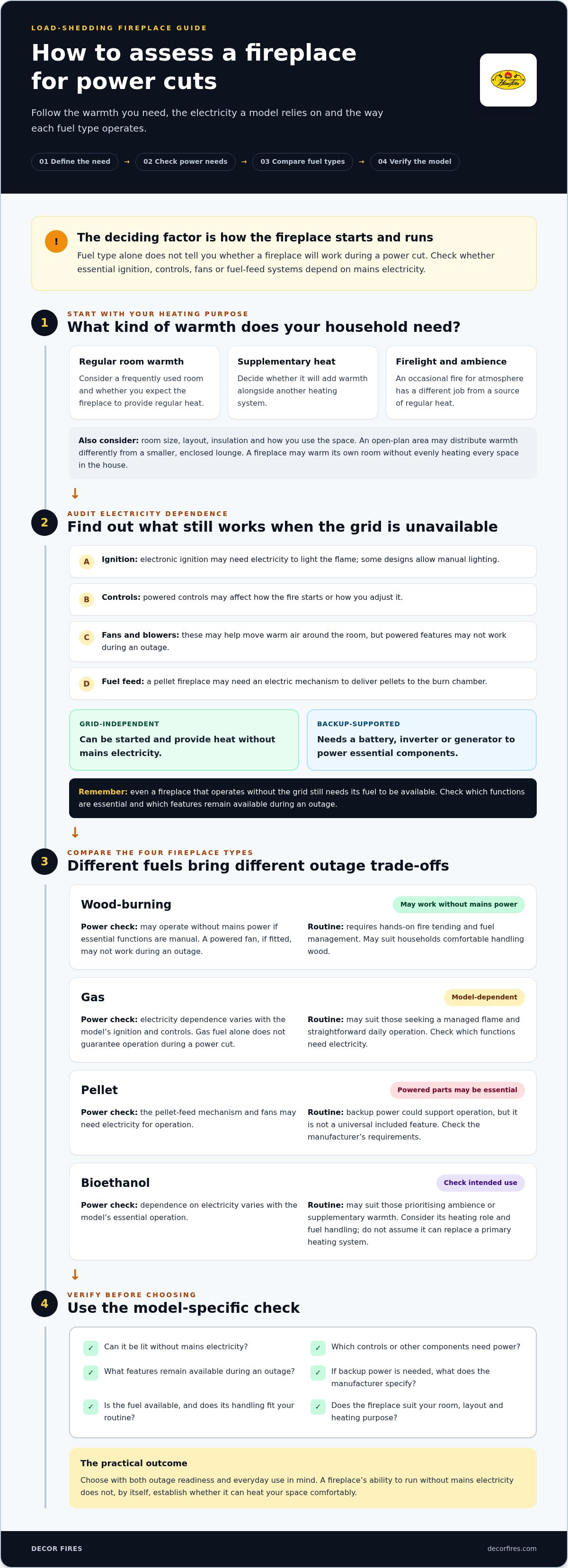
How to choose an outage-ready fireplace for your home
A considered choice balances how much warmth you need with what the fireplace requires to operate. Use this four-step checklist to narrow the options before settling on a style that suits your space.
- Define your heating needs. Decide whether you want regular warmth in a frequently used room, supplementary heat or a welcoming focal point. Consider how long power cuts typically last in your household and how often you’ll use the fireplace outside outages.
- Assess electricity reliance. Identify which functions need mains power, such as ignition, controls, fans or pellet feeding. If a component is essential, plan suitable backup power where appropriate, but don’t treat an inverter or battery as a guarantee of uninterrupted operation. Requirements depend on the fireplace.
- Choose a fuel and routine. Think about fuel storage and handling, how much tending you’re comfortable with, and the convenience you want day to day. Your choice should suit your outage priorities and the way you live when the grid is available.
- Plan the installation. Fireplace type, room layout and intended position all shape installation needs. Consider these details early so the fireplace and its essential components are planned as part of the home, rather than treated as an afterthought.
Match fireplace performance to the room
Room dimensions are only part of the picture. An open-plan lounge connected to a dining area has different heating demands from an enclosed room. Insulation and furniture layout can also affect how warmth is experienced. An undersized fireplace may struggle to meet your expectations, while an oversized choice may not suit the way you use the space. For guidance on evaluating stove options, read the closed-combustion cast iron stove selection guide. If you’re considering a fireplace between connected rooms, the double-sided fireplace design and heat guide explores relevant layout and planning considerations.
Plan fuel, installation and everyday operation
Picture an ordinary evening as well as a power cut. Wood involves hands-on tending and a place to store fuel; other fireplace types have their own fuel and operating requirements. Consider whether you want to manage a fire actively or prefer a simpler routine, then factor in cleaning and the fireplace’s intended heating role. Backup power may help a model that relies on electrical components, but its suitability depends on those components and the setup.
The best fireplace for load shedding is one whose heating purpose, electrical needs and daily routine all make sense for your home. Explore fireplace options with Decor Fires and use its product-selection and installation guidance to bring those priorities together.
Explore fireplace options with Decor Fires
The right fireplace brings together three practical priorities: what it needs to operate during a power cut, how much warmth you want, and how it fits your everyday routine. Fuel type alone can’t promise outage performance, so compare each model’s essential functions as carefully as its appearance and intended heating role.
Turn your priorities into a shortlist
Start with the room you want to warm and how you use it. Then note your preferred fuel and how long you’d like the fireplace to operate during an outage. If independence from the grid is central, look for a design whose essential operation doesn’t rely on mains power. If you favour a more convenient routine, consider whether powered ignition, controls, fans or pellet-feeding components need suitable backup.
Decor Fires offers built-in and freestanding fireplaces, alongside pellet, gas and bioethanol options. These provide different ways to shape a room, but outage performance depends on the individual model and its requirements. A pellet system, for example, may need electricity for key components, while gas ignition and controls can vary. Use your shortlist to compare room suitability, fuel preference, heating purpose and power needs together.
Make the next step feel straightforward
Once you’ve identified your priorities, expert product-selection guidance can help you weigh practical details alongside design: where the fireplace will sit, how you’ll use it through the seasons, and what its operation requires during load shedding. Installation planning matters too, since the fireplace type and your home’s layout influence what needs to be considered.
The best fireplace for load shedding is not necessarily the one with the most features. It’s the one that suits your room, delivers the kind of warmth you need and has clear, manageable power requirements. With considered planning, you can balance dependable comfort with the pleasure of a beautiful hearth and a routine that feels right at home.
Explore fireplaces with Decor Fires and take the next step towards a warm, welcoming space shaped around your household.
Choose warmth that suits your home
The best fireplace for load shedding is the one whose essential operation matches your power needs, heating purpose and everyday routine. Wood-burning, gas, pellet and bioethanol options each have different considerations, so focus on model-specific electricity requirements rather than assuming any fuel guarantees outage performance.
Decor Fires offers a broad range of indoor fireplace categories, with expert advice for selection and installation to help you weigh comfort, design and practical needs together. Explore fireplaces for a warmer, more resilient home, and take a thoughtful next step towards a welcoming hearth that feels right for your household.
Frequently Asked Questions
Which fireplace works best during load shedding?
There isn’t one fireplace type that’s best for every home during load shedding. The best fireplace for load shedding is a model whose essential ignition, controls and heat-producing operation suit your outage needs. A manually operated wood-burning fireplace may work without mains power, while gas requirements vary and pellet feed systems may need backup. Match the model’s requirements to your room, heating purpose, fuel preference and daily routine.
Can a gas fireplace work without electricity?
Some gas fireplaces may work without mains electricity, but it depends on how the individual model ignites and operates. A fireplace with electric ignition or powered controls may need electricity for those functions, even if its fuel supply is available during an outage. Review the model’s operating information to see what works without power, including whether you can start the fire, adjust it and receive useful heat as intended.
Do pellet fireplaces need electricity to operate?
Pellet fireplaces may need electricity to run components such as the mechanism that feeds pellets into the fire or a fan that circulates warmth. If an essential component loses power, the fireplace may not operate as expected. Backup power, such as a suitable battery or inverter, may support operation, but it isn’t automatically included. Check the model’s requirements and plan for the functions it needs during an outage.
Are wood-burning fireplaces a good choice during power cuts?
A wood-burning fireplace can be a good option during power cuts if its essential operation, including lighting and heat production, doesn’t rely on mains electricity. It may provide a more independent source of warmth, but it requires hands-on tending and fuel handling. If the fireplace has a powered fan, that feature may stop during an outage. Consider both the model’s design and the effort you’re comfortable with.
Can a fireplace heat an entire home during load shedding?
A fireplace can provide warmth during load shedding, but that doesn’t mean it will heat every room evenly or replace a whole-home heating system. Performance depends on the fireplace’s heat output, the room’s size and layout, insulation, and how connected spaces are arranged. Decide whether you need reliable warmth in one frequently used room or broader household coverage, then choose a fireplace suited to that purpose.
What backup power does a fireplace need during load shedding?
The right backup depends on which components the fireplace needs to operate. Electric ignition, controls, fans or pellet-feeding systems may require power, so identify the essential functions before planning an inverter, battery or generator. Don’t assume that backup power guarantees uninterrupted operation: the setup must support the fireplace’s requirements for the intended use. A model that operates manually without electricity may not need backup for essential operation.
Is a bioethanol fireplace suitable as a main source of heat?
A bioethanol fireplace may suit a room where ambience or supplementary warmth is the priority, but don’t assume it can serve as your home’s main heat source. Suitability depends on the model’s intended use and heat output, as well as the size and layout of the space. Compare those details with your household’s heating needs, and follow the fireplace’s instructions for operation, ventilation and installation.