
Pellet Fireplace Guide: How to Choose the Right Heating Solution

What if the easiest fireplace to live with isn’t the one that asks you to tend the flames? A pellet fireplace can provide welcoming warmth with automated fuel feeding, but that convenience comes with practical considerations: electricity, fuel quality and regular upkeep. Whether you’re comparing it with a wood-burning fireplace or deciding if it suits your home, the right choice depends on how you want heating to fit into daily life.
It’s natural to want the comfort and glow of a hearth without taking on a routine that doesn’t suit you. This guide explains how pellets are fed and burned, what everyday operation involves, and which features and installation needs to compare before choosing a model. You’ll see where automation can make things easier, and where a pellet system still needs attention, so you can decide whether its balance of comfort, design and routine works for your home.
We’ll look at the operating cycle, power requirements, formats, maintenance and placement. With a clear picture of what to expect, you can compare pellet fireplaces and choose a heating solution that feels inviting on an ordinary evening as well as when friends gather around the hearth.
Key Takeaways
- Understand how a pellet fireplace feeds and burns fuel, and what its everyday operating routine involves.
- Compare freestanding, insert and built-in formats by considering room placement and installation needs as well as appearance.
- Use a practical checklist to weigh room requirements, controls, pellet handling and maintenance.
- Consider power dependence and the selected model’s requirements when deciding whether automated heating suits your household.
- Explore Decor Fires’ pellet fireplace range with expert advice on product selection and installation planning.
What Is a Pellet Fireplace, and How Does It Heat a Home?
A pellet fireplace is a heating appliance that burns small, compressed wood pellets to warm an indoor space. Pellets are stored in the appliance and fed into a combustion area, where they burn to produce heat. The term can describe different appliance formats. “Pellet stove” is also commonly used, particularly for freestanding units. The names overlap, but the design and installation arrangement can differ.
For an introduction to the appliance’s history, components and operating principles, see Pellet stove. The basic idea is simple: prepared fuel is supplied to a controlled fire, rather than logs being added by hand whenever the flames need attention.
How does a pellet fireplace produce heat?
Pellets sit in a hopper, then a feed mechanism moves them towards the combustion area. There, they burn and release heat into the room. Controls and operating features vary by model, so use the selected appliance’s instructions for guidance on starting and operating it.
Heat from combustion is separate from the way warmth circulates. Some models use a fan to move heated air, while others may support ducted distribution. These features aren’t universal. Their suitability depends on the appliance and installation design.
What is the difference between pellet fireplaces and wood fireplaces?
Both use wood-based fuel, but their daily routines differ. Pellets are prepared, compressed pieces that can be stored and fed through the appliance’s mechanism. Logs are loaded manually into a wood fireplace. A pellet appliance may automate part of the fuel-feeding process, while wood burning generally calls for more hands-on tending.
Neither option is right for every household. Consider whether you prefer managed fuel feeding or the familiar ritual of placing logs on the fire. Think, too, about how you’ll store and handle the fuel. For a wider look at heating choices, read our guide to wood stoves versus gas fireplaces in South Africa.
How a Pellet Fireplace Works Day to Day: Fuel, Controls and Care
A pellet fireplace’s appeal often lies in a steady routine: load suitable fuel, use the controls as directed, then follow the care instructions for that appliance. Details vary between models, so use the operating manual rather than assuming every fireplace starts, adjusts or cleans in the same way.
What happens when you start and adjust a pellet fireplace?
In general, pellets go into the hopper and a feed mechanism supplies them to the combustion area. The appliance then ignites the fuel according to its start-up process. Once it’s running, you may be able to adjust the heat through the controls. Use programmable settings or remote operation only if the selected model’s documentation describes those features.
Some appliances use electrical components for fuel feeding, ignition or air movement. Requirements vary, so review the model documentation, including what to expect if household power is interrupted. Follow the instructions for start-up, adjustment and shutdown, and keep the required clearances unobstructed.
What fuel and maintenance does a pellet fireplace need?
Use wood pellets suited to the appliance and follow its guidance on fuel quality and storage. A dry, tidy storage spot helps protect pellets from moisture. Check the manufacturer’s instructions for specific handling advice. Before choosing a model, consider where you’ll store the fuel and how easily you can replenish the hopper as part of your household routine.
Ash removal and cleaning are also part of ownership. The frequency and method depend on the appliance, so follow the manufacturer’s instructions rather than relying on a general schedule. Routine care helps support reliable operation and clear airflow. The selected model’s manual is the practical reference for fuel, operation and maintenance requirements.
As you compare options, consider the whole routine, from storing fuel to understanding electrical requirements and following cleaning guidance. Decor Fires sells pellet fireplaces and provides expert product-selection and installation advice. Browse the pellet fireplace range as you consider what will suit your home.
Pellet Fireplace Formats Compared: Freestanding, Insert or Built-In?
The right format is about more than the look of the fire. A pellet fireplace needs to work with the room’s layout and installation design. Consider where it will sit, how it relates to the surrounding structure and what the project can accommodate.
| Format | Placement and design effect | Project context and questions |
|---|---|---|
| Freestanding | A visible, standalone feature that can anchor a room. | Where can it be positioned, and what clearances and flue planning does the selected model require? |
| Insert | Designed to sit within a suitable fireplace opening, where the project allows. | Is there an existing opening, or will the surrounding structure need to be designed for the appliance? |
| Built-in | Integrated into a planned surround for a more considered, seamless appearance. | How will the design accommodate the appliance and its installation requirements? |
When might a freestanding pellet fireplace suit a room?
A freestanding model makes the appliance part of the room’s visual story. It might become a central gathering point or sit within a defined living area. Its position affects furniture arrangement and sightlines, so picture how people will move and settle around it. Clearances and flue planning depend on the model and installation. Factor them into placement from the outset, rather than treating them as finishing details.
How do pellet inserts and built-in fireplaces differ?
An insert is intended to fit within a suitable fireplace opening, while a built-in format is planned as part of the surrounding structure. Neither description assumes that your home already has a fireplace or that a particular construction approach will suit it. The room, appliance requirements and overall installation design shape the possibilities. For integrated projects, the built-in fireplace installation planning guide offers further considerations. For broader context on matching output to a space, see the closed-combustion fireplace heat output guidance.
Consider the whole project before choosing by appearance alone. The room’s layout, intended focal point and model requirements should work together. A clear plan for the space and appliance gives you a practical basis for comparing formats and discussing installation needs.
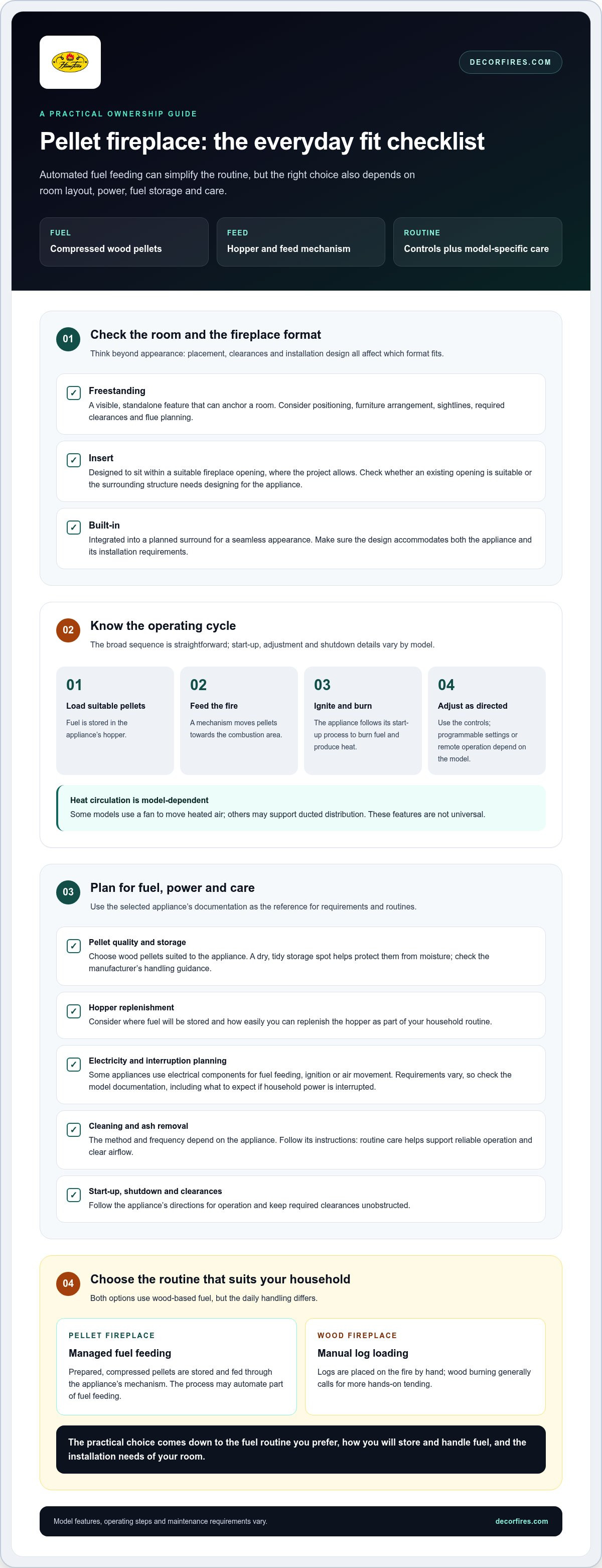
How to Choose a Pellet Fireplace for Your Home
A good choice brings together the room, installation and the way your household likes to use heat. Automated fuel feeding can make operation more convenient, but it doesn’t remove the need to manage pellets or follow the appliance’s care routine. Start with the practical details you’ll live with, then compare models and finishes.
- Room and heating area: Note the room’s dimensions, layout and which areas you want to warm.
- Format and placement: Consider whether a freestanding, insert or built-in design suits the space and installation plan.
- Controls: Decide which control features would make everyday use easier for you.
- Fuel routine: Think about where suitable pellets can be stored and how you’ll replenish the appliance.
- Care and access: Consider how the model’s cleaning requirements fit your household routine.
Which pellet fireplace features matter most?
Prioritise features you’ll use regularly instead of choosing optional extras in isolation. Controls that suit your daily habits may matter more than remote operation if you’re happy to adjust the appliance directly. Consider how heat is distributed, how fuel is loaded and whether the parts needing routine attention are accessible. Electrical requirements and operation vary by model, so include them in your comparison and consult the appliance documentation.
How should you assess output and installation requirements?
Room dimensions are a helpful starting point, but layout and the intended heating area matter too. An open space, a room divided by doorways and a compact living area can respond differently to the same appliance. Don’t use a single output figure as a universal sizing rule. Flue design, clearances and other installation details also depend on the project and selected model.
Check every output and efficiency claim against the exact model documentation, including the stated test conditions and any assumptions about heat distribution or ducting. Figures from one appliance don’t show how another will perform in your home. Expert selection and installation advice can help relate those specifications to your room and plans.
Use the checklist to create a shortlist, then explore Decor Fires’ pellet fireplace range and selection advice to compare comfort, design and the routine you’re prepared to maintain.
Explore Pellet Fireplaces with Decor Fires
Choosing a fireplace is easier when you consider the appliance, room and daily routine together. A pellet fireplace should suit the space it’s intended to heat, work with the installation design and feel manageable in everyday use. Decor Fires sells pellet fireplaces and provides expert advice on product selection and installation, helping you compare practical requirements with the atmosphere you want to create at home.
What can expert fireplace advice help you resolve?
Selection advice connects your room layout and design preferences with your heating priorities. A freestanding format can create a distinct focal point, while an insert or built-in design calls for closer consideration of how the fireplace integrates with its surroundings. Your intended heating area, preferred controls, fuel-handling routine and care expectations all help shape a useful comparison.
Product selection and installation planning belong in the same conversation. The model’s requirements need to suit the room and project, rather than being considered only after you’ve settled on an appearance. Bring your plans and questions about the space, fuel, controls, cleaning or installation into the discussion, so those needs inform the options you consider.
What should you have in mind before choosing?
You don’t need every detail decided before starting. A few notes can make it easier to compare suitable options:
- The room’s layout and the area you want to heat.
- Whether you’re drawn to a freestanding, insert or built-in format.
- The atmosphere you’d like the fireplace to bring to everyday evenings and time spent together.
- Questions about controls, pellet storage, routine care and installation planning.
These priorities keep the decision grounded in both comfort and practicality. Start with the warmth and character you’d like at home, then work through installation considerations and everyday requirements as you compare options. Decor Fires sells pellet fireplaces and provides knowledgeable guidance to customers across South Africa.
Explore the pellet fireplace range and get expert advice from Decor Fires to find an option that suits your room and routine.
Choose a Hearth That Fits Your Home
The right pellet fireplace is about more than automated fuel feeding. Its format, heating role and installation must suit your room, while its controls and care routine should feel manageable day to day. Compare freestanding, insert and built-in designs with your layout in mind, and assess output and other performance claims against the documentation for the exact model.
Convenience doesn’t mean maintenance-free. Fuel storage, electrical requirements and routine cleaning all belong in your decision, alongside the warmth and welcoming focal point you hope to create.
Decor Fires sells pellet fireplaces and provides expert advice on product selection and installation. Bring your room, design preferences and practical questions into the conversation, then explore pellet fireplaces with Decor Fires. With the right details in view, you can choose a heating solution that feels at home in your space and everyday routine.
Frequently Asked Questions
How does a pellet fireplace work?
A pellet fireplace burns compressed wood pellets to produce heat. Fuel is stored in a hopper and, in many designs, a feed mechanism moves it into the combustion area. The appliance ignites the pellets and releases warmth into the room. Controls and heat-circulation features vary by model. Check the selected model’s instructions for its start-up sequence, controls and fuel requirements, as operating details aren’t the same for every appliance.
Is a pellet fireplace suitable for everyday home heating?
It can suit everyday heating if its output, installation and operating routine match your home and needs. Consider the room or area you want to heat, how the selected model is controlled, and whether storing and replenishing pellets fits your household habits. Routine care is part of ownership, too. Weigh the model’s documentation and installation requirements against how you plan to use it, rather than assuming one appliance will suit every space. For households looking to integrate biomass into a broader green energy strategy, providers of comprehensive renewable home solutions like DE Systemy demonstrate how alternative heating and eco-friendly technologies can work together efficiently.
Do pellet fireplaces need electricity to operate?
Some pellet fireplaces use electrical components, such as a fuel-feeding mechanism, ignition system or fan, but requirements depend on the model. Check the appliance documentation for its power needs and what happens if the supply is interrupted. Don’t assume that a fireplace will continue operating during an outage or that a particular backup option is suitable. Include electricity dependence in your decision, especially if uninterrupted heating is important to your household.
Are pellet fireplaces more efficient than wood fireplaces?
There isn’t a reliable universal answer. Efficiency depends on the specific appliances and how their figures are measured and presented. Compare the exact model documentation, including test conditions, rather than treating a general category claim as a direct comparison. Fuel quality, operation and maintenance can also affect performance. Consider the everyday difference as well: pellet appliances may automate fuel feeding, while traditional wood fireplaces involve loading logs by hand.
Can a pellet fireplace heat more than one room?
Some models may support heat distribution beyond the room where the appliance is installed, but this depends on the model and installation design. A fan may circulate warmth within a space, while ducted distribution is a separate feature and isn’t available on every appliance. Check the selected model’s documentation and consider your home’s layout and intended heating area before expecting heat to reach other rooms.
What maintenance does a pellet fireplace need?
Routine care generally includes removing ash and cleaning the parts identified in the appliance instructions. The recommended method and frequency vary by model, so follow its manual rather than applying a universal schedule. Keeping designated areas clean helps support reliable operation and clear airflow. Use the specified fuel and follow the manufacturer’s guidance for storage, cleaning and any checks required as part of normal ownership.
How do I choose between a freestanding pellet fireplace and an insert?
Choose by considering the room and installation design, not appearance alone. A freestanding fireplace is a standalone feature, so placement, clearances and flue planning matter. An insert is designed to integrate into a suitable fireplace opening, which makes the surrounding structure part of the assessment. Compare the model’s requirements with your layout, desired focal point and installation plans. Expert product-selection advice can help bring those considerations together.