
Wood Stove vs Gas Fireplace in South Africa: Which Suits Your Home?

What if the best fireplace isn’t simply the one that feels warmest, but the one whose daily routine suits your home? A wood stove vs gas fireplace South Africa comparison is about more than heat: it’s also about whether you enjoy tending a real flame or prefer warmth at the touch of a control. Both can make winter evenings more inviting, but each asks something different of your household.
To choose between them, consider upkeep, convenience and how each appliance operates during power interruptions. The right fit depends on how you live, the room you want to warm and the fireside atmosphere you enjoy.
This guide compares wood and gas across everyday operation, warmth, running costs and installation needs. It also covers fuel planning, room layout and the differences between built-in and freestanding options. With the trade-offs in view, you can choose a fireplace that suits both your space and your routine.
Key Takeaways
- In a wood stove vs gas fireplace South Africa comparison, weigh the hands-on ritual of tending a wood fire against the ease of operating a gas fireplace.
- Consider how each option starts, adjusts and shuts down, as well as the upkeep that fits your household routine.
- Plan for fuel storage and ash removal with wood, or model-specific care with gas. Running costs depend on fuel prices, usage and the appliance.
- Use your room, fireplace placement, fuel planning and preferred ambience to guide your decision.
- Explore built-in and freestanding wood and gas fireplaces with Decor Fires, with selection and installation advice shaped around your home.
Wood stove vs gas fireplace in South Africa: what are you really choosing?
Picture a winter evening built around the steady work of lighting and tending a fire, or one where a flame is ready with a simpler start-up. A wood stove vs gas fireplace South Africa comparison is not just about fuel. It’s about the routine, atmosphere and practical planning you want around the hearth.
A wood stove is a wood-burning appliance with an enclosed firebox. Unlike an open fireplace, it contains the fire within the appliance and is designed to burn wood there. For an overview of how a modern wood-burning stove works, Wikipedia provides background on stove types and operating principles. Gas fireplaces burn gas instead, offering a different way to enjoy a visible indoor flame.
Neither option is automatically the better heater. The warmth you feel depends on the appliance’s suitability and output, the room’s layout, and the way the fireplace and flue or venting are installed. Fuel planning, upkeep and how your household uses the space matter too.
What does a wood stove offer in everyday use?
A wood fire asks for your attention: you light it, tend it as it burns and add logs when needed. For many households, that hands-on rhythm is part of the appeal. The first sparks, crackle and changing flames create a traditional, expressive centrepiece for quiet evenings or gatherings.
There’s practical planning as well. You’ll need a suitable place to store firewood and a routine for handling ash. Think about how you’ll source and keep fuel ready through the colder months, since the quality and condition of the wood affect the experience. For some households, the preparation is part of the pleasure; for others, it’s an extra task.
What is different about a gas fireplace?
A gas fireplace suits those who prefer a more direct route to a welcoming flame. Depending on the model, you may be able to start and adjust the fire using controls, rather than lighting and reloading logs. This means less day-to-day handling of fuel and ash, although the exact operating routine and care requirements vary between fireplaces.
Gas has a distinct look and rhythm: the flame can feel composed and convenient, rather than changing with each log. Utility needs depend on the model, so don’t assume every gas fireplace operates in the same way. Consider the atmosphere you want, how much involvement you enjoy and what fuel planning works for your household. The right choice fits your home as comfortably as it fits your evenings.
How wood and gas fireplaces differ in warmth, control and daily effort
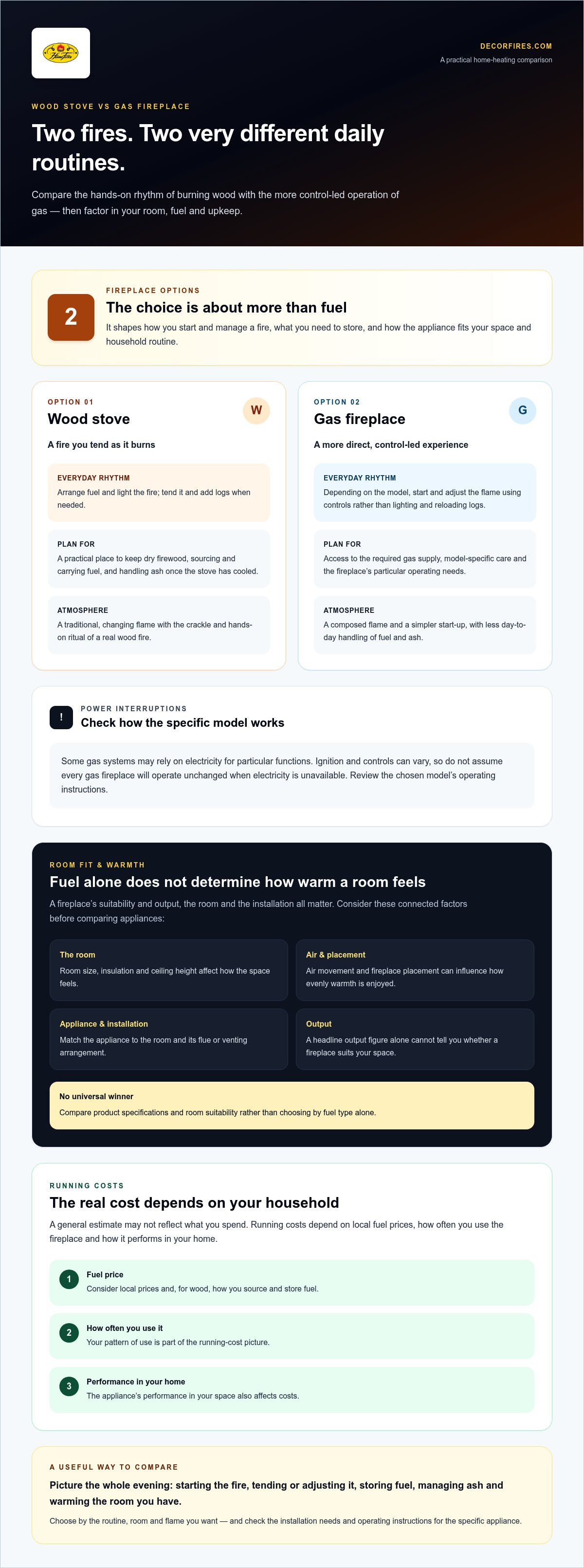
The difference is clearest over the course of an evening: a wood fire involves preparing and tending the flame, while a gas fireplace is generally operated through model-specific controls. Think through the whole routine, from starting the fire to managing fuel and clearing up afterwards.
Which fireplace is easier to operate day to day?
With a wood stove, start-up means arranging fuel and lighting the fire. As it burns, you may need to tend it or add wood. Once it has cooled, ash needs to be handled and the stove needs its usual care. You’ll also need a dry, practical place to keep firewood, as its condition affects how readily it burns.
A gas fireplace removes the need to store and load logs, but controls and ignition vary by model. Some systems may rely on electricity for particular functions, so don’t assume every gas fireplace will operate unchanged during an interruption. If power reliability matters to your decision, review the chosen model’s operating instructions, including what happens to ignition and controls when electricity is unavailable. Which routine feels more natural: tending a fire as part of the evening, or choosing a more direct, control-led experience?
How do warmth and room suitability compare?
A fireplace’s heating performance isn’t determined by fuel alone. Appliance output, room size, insulation, ceiling height and the way air moves through the space all influence how warm a room feels. A fireplace suited to a compact living area may not be the right match for a large, open-plan room. Placement can also affect how evenly the warmth is enjoyed.
Installation suitability matters too. The appliance needs to work with the room and its flue or venting arrangement, so a headline output figure won’t tell the whole story. For a closer look at matching a closed-combustion fireplace’s heat output to your space, see this closed-combustion fireplace heat-output guide.
In a wood stove vs gas fireplace South Africa comparison, avoid declaring a universal winner without comparing product specifications and considering the room. The U.S. Environmental Protection Agency’s guidance discusses wood-burning appliances and emissions. Its EPA clean air standards are US-specific, not South African requirements, so use them as background rather than local regulatory advice.
To compare options for your room and preferred flame, explore wood and gas fireplace options alongside selection and installation advice.
Running a wood stove vs gas fireplace: fuel, upkeep and interruptions
Fuel planning and care are part of the real cost of enjoying a fireplace, alongside the initial appliance choice. With wood, consider how you’ll source, store and carry fuel, and whether you’re comfortable handling ash. With gas, consider your household’s access to the required gas supply and the operating needs of the particular model. Running costs depend on local fuel prices, how often you use the fireplace and how it performs in your home, so a general estimate may not reflect your experience.
What upkeep does each fireplace involve?
A wood stove needs regular attention. Remove ash safely once it has cooled and keep the area around the appliance tidy. Wood condition and storage affect everyday use too, so plan a place to keep your supply organised and ready. Follow the appliance manufacturer’s guidance and installation requirements for periodic inspection or maintenance.
A gas fireplace avoids ash handling, but still needs appropriate care. Tasks and recommended service intervals depend on its design, controls and installation, so follow the manufacturer’s instructions rather than assuming every model has the same needs. Ventilation and installation arrangements also vary by appliance, making them important considerations from the outset.
Efficiency claims need context. The U.S. Environmental Protection Agency says certain EPA-certified wood stoves can be up to 50% more energy efficient than traditional fireplaces. That comparison applies to the appliances and standards discussed by the US agency. It isn’t a direct comparison with gas fireplaces or a South African rating, so compare relevant specifications for the models you’re considering.
What should South African households consider during power interruptions?
Don’t assume a gas fireplace will either keep working or stop working during an outage. Its behaviour depends on the ignition design, controls and installation. Before choosing, understand how the specific appliance starts and operates when electricity is unavailable. A wood stove may offer a different relationship with household power, but its suitability still depends on a properly planned installation and how you intend to use it.
Fuel access and electricity conditions vary between households, so base your decision on your own supply arrangements rather than broad assumptions. For more outage-focused considerations, read the South African fireplace guide for power cuts.
In a wood stove vs gas fireplace South Africa comparison, weigh everyday effort, fuel planning and outage behaviour alongside warmth. Explore wood and gas fireplace options with selection and installation advice for your home.
How to decide whether a wood stove or gas fireplace suits your home
Start with the room and the people who gather in it. Rather than choosing by appearance alone, weigh how the fireplace will fit your space, your daily routine and the kind of warmth you want to come home to.
- 1. Start with the room. Note its size, layout and connection to other areas of the home. Think about where a fireplace could sit and whether that position works for the way you use the space, from quiet evenings to hosting family and friends.
- 2. Picture your usual routine. Would preparing and tending a wood fire feel like a comforting part of the evening, or would you prefer the more direct operation of a gas fireplace? Consider who will use it and how much time you want to spend managing the fire.
- 3. Plan for fuel and storage. A wood stove calls for a practical place to keep firewood and a routine for handling ash. A gas fireplace depends on the supply arrangement and operating requirements of its model. Consider what works for your household rather than assuming fuel access or costs are the same everywhere.
- 4. Account for installation. The room, fireplace position and required flue or ventilation all influence which options are suitable. Let product specifications and installation planning guide your decision, not just a general comparison between fuel types.
Which option feels more comfortable in your home?
A wood stove may feel like a natural fit if you enjoy tending a real fire and can plan for solid fuel. Gas may appeal if adjustable flame control and a simpler daily routine matter more, provided the model’s operating needs and gas supply suit your home. These are preferences, not fixed rules. You can value convenience and still love the look of a wood fire, or enjoy the ritual while keeping fuel handling manageable.
If you’re leaning towards wood, explore this cast-iron stove selection guide for more help considering stove features. The wood stove vs gas fireplace south africa decision becomes clearer when you consider your room, routine and installation needs together. Decor Fires offers selection and installation advice for built-in and freestanding wood and gas fireplaces. Explore fireplace options for your home.
Explore wood and gas fireplaces with Decor Fires
There’s no single winner in the wood stove vs gas fireplace South Africa comparison. A wood fire can make tending the flames part of the pleasure, while gas may suit a household that values straightforward control. The right fireplace belongs naturally in your room and fits the way you use it, whether you’re creating a cosy corner for quiet evenings or a welcoming centre for gatherings.
What can you explore when comparing fireplace options?
Decor Fires offers indoor wood and gas fireplaces in built-in and freestanding options, giving you different ways to shape your space. A built-in fireplace can be considered as part of the room’s overall design, while a freestanding option makes the appliance a distinct feature. Suitability depends on the room and installation, so compare more than appearance.
As you compare options, focus on:
- Specifications: Compare each appliance’s details, including heat output and operating requirements.
- Room suitability: Consider how the fireplace’s position and the room’s layout will affect its use.
- Everyday experience: Think about the fuel routine, controls and care you’re comfortable with.
These points help you compare like with like, rather than relying on a broad claim that one fuel type is always more efficient or convenient. The best match depends on the particular fireplace and how it will work in your home.
What are sensible next steps before installation?
Before planning, gather a few details about the space: which room you want to warm, how it’s used, where a fireplace might sit and what kind of flame experience you prefer. Note practical constraints, such as available space and existing flue arrangements. These details give selection advice a useful starting point and help inform installation planning.
Decor Fires provides fireplace selection advice and installation, connecting your preferred style and fuel type with your home’s requirements. You don’t need to have every decision made already. Comparing options can help you understand what may suit your room and routine, then inform a considered installation plan.
Explore fireplace options with Decor Fires and find a wood or gas fireplace that feels at home in your space.
Choose the fireplace that feels right for your home
Choosing between wood and gas involves more than warmth. Consider the room and installation, the fuel and upkeep you’re comfortable planning for, and whether you’d enjoy tending a fire or prefer simpler flame control. In a wood stove vs gas fireplace south africa comparison, neither option suits every household. The best fit complements your space and everyday routine.
As you narrow down the possibilities, compare the specific fireplace’s features and operating needs rather than relying on broad assumptions about either fuel type. Decor Fires offers wood and gas fireplaces, including built-in and freestanding options, with product selection advice and installation to help you plan for your home.
Ready to compare options for your space? Explore wood and gas fireplaces with Decor Fires.
Frequently Asked Questions
Is a wood stove or gas fireplace better for a South African home?
Neither is best for every South African home. The right choice depends on your room, routine and preferred fireside experience. A wood stove may appeal if you enjoy tending a real fire and can plan for storing fuel, while a gas fireplace may suit you if you value convenient flame control. Compare the appliance’s heat output and operating requirements with your room and installation needs before deciding.
Can a gas fireplace work during load shedding?
It depends on the particular gas fireplace, especially its ignition system and controls. Some models may rely on electricity for certain functions, so don’t assume every gas fireplace will operate during load shedding or that all models will stop working. Read the operating instructions for the model you’re considering to understand how it starts and runs when power is unavailable. This matters if outage performance is important to your household.
Which fireplace is cheaper to run in South Africa, wood or gas?
There isn’t one running-cost answer for every South African household. Costs depend on local firewood or gas prices, how frequently you use the fireplace and the appliance’s suitability for the room. Wood also involves fuel storage and ash handling; gas has its own supply and model-specific operating requirements. Compare your likely usage and local fuel arrangements rather than relying on a general estimate.
Does a wood stove heat a room better than a gas fireplace?
Not necessarily. How warm a room feels depends on the appliance’s heat output, the room’s size and layout, insulation and installation suitability. A stove that’s well matched to one space may not suit another. Compare the specifications of the particular wood and gas fireplaces you’re considering, and think about where each could sit. Fuel type alone doesn’t determine which will heat your room more effectively.
How much maintenance does a wood stove need compared with a gas fireplace?
A wood stove involves regular ash handling once the fire has cooled, along with keeping the appliance area tidy and fuel properly stored. A gas fireplace doesn’t produce wood ash, but still needs care according to its design and the manufacturer’s guidance. Separate everyday tasks from any periodic maintenance or inspections specified for the appliance. Requirements vary, so follow the instructions for the exact model rather than assuming all fireplaces need identical care.
Is a wood stove or gas fireplace easier to use every day?
A gas fireplace may feel easier if you prefer a simpler start-up routine and controllable flame, although controls vary by model. A wood stove asks you to prepare, light and tend the fire, then handle ash and fuel storage. Some people enjoy that hands-on ritual; others prefer fewer steps. Think about how much time and attention you want to give your fireplace on an ordinary evening, not just the atmosphere you hope it creates.
What should I consider before installing a wood stove or gas fireplace?
Start with the room: how it’s used, where the fireplace could sit, and what kind of warmth and ambience you want. Consider your preferred fuel routine, available storage, appliance specifications and any flue, ventilation or utility needs. Installation suitability depends on the chosen fireplace and your home. Decor Fires offers wood and gas fireplace selection advice and installation to help you match the options to your space and household routine.