
Closed Combustion Cast Iron Stove: How to Choose the Right One

A cast iron stove isn’t automatically the cosiest choice for every home. A closed combustion cast iron stove may appeal for its traditional character and lingering warmth, but how it feels in daily use depends on the room, the stove’s design and the way you like to heat your home. If you’re weighing it against steel, the differences can be less obvious once the fire is lit.
Look beyond appearance: heat-up and cool-down behaviour, room size and upkeep all affect whether a stove feels comfortable and practical. The right choice should bring inviting warmth without overwhelming the space or adding more maintenance than you want.
This guide compares cast iron and steel stoves by heat behaviour, room suitability and care. It also outlines installation questions to raise before choosing a model, with practical points on heating needs, placement and what to confirm with a qualified professional. Decor Fires offers product-selection and installation advice to help you narrow your options and find a stove that suits your home and preferred way of gathering around the hearth.
Key Takeaways
- A closed combustion cast iron stove describes both an enclosed firebox and a material. Neither label alone guarantees how a particular model will perform.
- Compare cast iron and steel models by their stated specifications, and consider how room size, layout, insulation and operating habits affect comfort.
- Weigh each stove’s potential benefits and compromises against your household routine, preferred warmth and the look you want in the room.
- Assess the room, shortlist suitable models, then have installation needs reviewed by a qualified professional before deciding.
- Check current retailer listings and confirm each model’s specifications and care requirements, rather than assuming a particular stove is available or right for your home.
Closed combustion cast iron stove: what the material comparison really tells you
A closed-combustion stove has a fire inside an enclosed firebox, rather than an open hearth where flames and fuel are exposed to the room. Its design manages the air supply to the fire, while smoke and other combustion gases leave through a flue system suited to the appliance and its installation. This enclosure affects how the fire is contained and operated, but it doesn’t tell you on its own how much warmth a particular stove will provide.
The phrase closed combustion cast iron stove combines two separate ideas: how the fire is contained and the material used to build the appliance. Cast iron doesn’t guarantee a particular level of efficiency, heat output or ease of use. These depend on the individual model, its construction and design, how it’s installed, and how it’s operated. The stove also needs a suitable flue arrangement. Check the exact requirements for the model and home rather than assuming they from its material.
What does closed combustion mean in a cast iron stove?
The enclosed firebox separates the burning fuel from the room, while designed air inlets help supply air for combustion. Unlike an open fireplace, the fire is contained behind the stove’s body and door. The Wood-burning stove overview provides broader context on stove types and materials, including cast iron and steel. Designs still vary, so check the manufacturer’s operating guidance before comparing how a stove works.
Why compare cast iron with steel before choosing?
Material is one consideration alongside construction, the room’s needs and the care a model requires. Rather than relying on broad claims about how cast iron or steel always performs, compare the specifications and instructions for the actual stoves you’re considering. A retailer with product-selection and installation expertise, such as Decor Fires, can help you discuss your room, heating needs and installation questions.
Consider practical fit as well as appearance: where the stove will sit, how you expect to use the room, and what routine care the model requires. Installation needs to be assessed for the appliance and home, not inferred from a general material comparison. There’s no universal winner between cast iron and steel. The right option is the one whose verified details suit your household and preferred way of heating. For a closer look at the trade-offs, read this cast iron and steel stove comparison.
How cast iron and steel stoves differ in everyday warmth and use
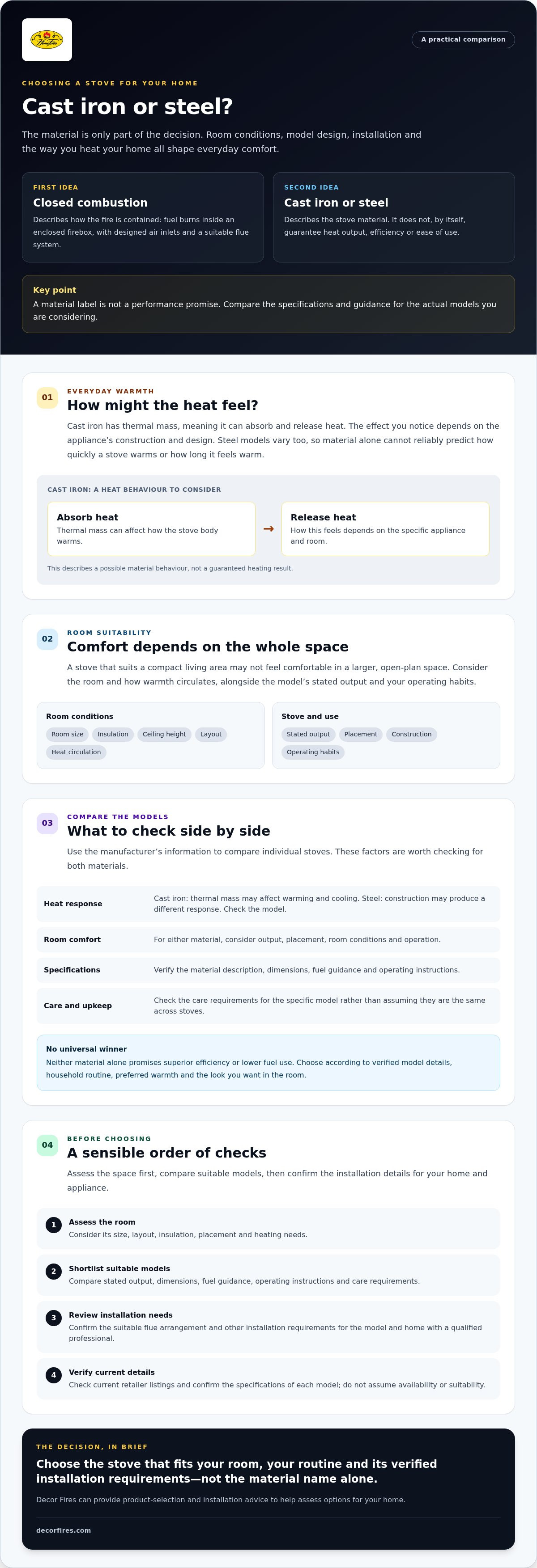
The material can influence how a stove responds as it warms and cools, but it isn’t a reliable shortcut to predicting comfort. Cast iron has thermal mass, meaning it can absorb and release heat. The effect you notice depends on the appliance’s construction and design. Steel stoves vary too, so compare specific models rather than assuming one material always warms a room faster or keeps it warm for longer.
Does a cast iron stove heat a room differently?
It may, but the experience depends on more than the stove body. Room size, insulation, ceiling height, layout and how warmth circulates all play a part, as do the appliance’s output and your operating habits. A model suited to a compact living area may not feel comfortable in a larger, open-plan space. Use manufacturer guidance and a qualified professional’s assessment to judge whether a closed combustion cast iron stove suits your room, rather than relying on material alone.
| Factor | Cast iron | Steel |
|---|---|---|
| Heat response | Thermal mass may affect how the body warms and cools; check the model. | Construction may produce a different response; confirm it in the specifications. |
| Room comfort | Depends on output, placement, room conditions and operation. | Depends on output, placement, room conditions and operation. |
| What to verify | Material description, dimensions, fuel guidance and operating instructions. | Material description, dimensions, fuel guidance and operating instructions. |
These are considerations, not guaranteed differences. A stove’s stated output and the conditions in your home matter more than a broad material label. Neither material alone promises superior efficiency or lower fuel use.
What should you compare in individual stove specifications?
Start with each model’s stated heat output and dimensions. Then check the manufacturer’s fuel guidance and operating instructions. Confirm which components are described as cast iron or steel: the body, panels, door or another part may use different materials. If a comparison suggests one stove heats up or cools down differently, look for model-specific manufacturer information before relying on that claim.
Flue suitability and installation requirements need to be assessed for the appliance and home. Ask a qualified professional in South Africa to review the proposed location, flue route, ventilation and building-specific requirements, and confirm which installation guidance applies to your chosen model. Once you’ve gathered your room details and questions, you can explore stove options and advice from Decor Fires.
Cast iron stove advantages and trade-offs: which home suits it?
A cast iron stove may appeal if you want a substantial focal point that feels at home in a relaxed living room, but the material alone can’t tell you whether it will suit your household. Think about how you use the room, when you want warmth and how much attention you’re comfortable giving routine care. A well-chosen stove should complement the rhythm of your home as much as its interior.
When might a cast iron closed-combustion stove be a good fit?
A cast iron model could suit a household that appreciates a traditional, solid-looking appliance and likes to make the fire part of an evening routine. The choice should reflect the specific stove’s design and operating guidance, not assumptions about every cast iron appliance. Consider whether the room is used throughout the day or mainly for relaxed evenings, then compare the model’s stated output and instructions with those needs.
Fuel and operating habits matter too. Penn State Extension’s guide to heating with wood covers practical considerations such as fuel and safe use. Follow the chosen manufacturer’s guidance for your stove and fuel rather than treating a material label as a promise of a particular experience.
What trade-offs should you consider before buying?
First, confirm the model’s stated weight and dimensions, then have the proposed position and supporting structure assessed as part of installation planning. A substantial appliance may not suit every location, and appearance alone won’t establish whether a space can accommodate it. Ask a qualified professional to consider the chosen model and your home before you commit.
Care requirements are also model-specific. Ask what the manufacturer recommends for the stove’s finish and components, and consider whether those tasks fit your household routine. Don’t assume cast iron is always more durable or more demanding to maintain; check the product documentation for the exact appliance.
A steel alternative may be worth comparing if a particular model’s construction, dimensions or design better suit your room and preferences. If quick heat response matters to you, look for reliable manufacturer information about the models rather than relying on general claims about steel or cast iron. A closed combustion cast iron stove is one option among several. The best fit comes from balancing verified specifications with your room, routines and preferred style of warmth.
How to assess room fit, installation and stove upkeep
A practical choice begins with the room, not the showroom. Before shortlisting a closed-combustion stove, note how the space is used, where people gather and where you might want the appliance positioned. A qualified professional can assess whether the room and proposed location suit the model, then help identify installation questions to resolve before you buy.
What should you check before planning a stove installation?
Prepare a few details to make the assessment more useful: room dimensions, the intended use of the space and the stove’s proposed position. If you’re considering a corner location, the corner closed-combustion fireplace planning guide can help you think through placement. It discusses a fireplace arrangement, so confirm how its advice applies to your specific freestanding or other stove model.
Next, ask the qualified professional to review the flue route, ventilation, required clearances and building-specific constraints. Don’t assume these details from the stove material or from another installation. The built-in fireplace installation planning guide may help distinguish considerations for built-in fireplaces from those for a stove. Let the chosen appliance’s instructions and a professional assessment guide your plan.
How do you plan for routine care and long-term use?
Before settling on a model, read the manufacturer’s instructions for operation, inspection and cleaning. Ask the retailer or installer which components need periodic checks, how often the manufacturer recommends them, and who is suitably qualified to carry out any checks or maintenance. This makes upkeep a clear part of your household routine, rather than an afterthought once the stove is in place.
- Room: Record dimensions, use and preferred position.
- Model: Check the specifications and instructions for the exact appliance.
- Installation: Discuss flue routing, ventilation, clearances and building constraints with a qualified professional.
- Care: Confirm inspection, cleaning and fuel guidance with the manufacturer or retailer.
Fuel matters too. Follow the manufacturer’s guidance for the specific stove instead of assuming every type of wood is suitable. Decor Fires offers product-selection and installation advice, so you can discuss your room and stove options before making a choice.
Choosing a closed combustion cast iron stove with confidence
A confident choice comes from matching the appliance to your home, not choosing cast iron on reputation alone. Bring together four essentials before deciding: confirmation that the room suits the stove, verified specifications for the exact model, a professional installation plan and clear manufacturer guidance on operation and care. These give you a sound basis for comparing options without assuming every model or material behaves alike.
What questions should you ask a stove retailer?
Start with the room and installation details assessed by a qualified professional. Ask which currently listed models may suit those needs, then request the manufacturer’s information for each one. In particular, clarify:
- Which parts of the stove are made from cast iron or steel?
- What are the model’s dimensions and stated heat output?
- What fuel does the manufacturer recommend, and what operating guidance should you follow?
- What installation support is available, and which tasks need a qualified installer?
- What routine care does the manufacturer specify for the appliance and its components?
Compare like with like. A material description may apply to the body, door or other components, so check the details rather than relying on a broad label. Availability can change too, so ask about models in current retailer listings instead of assuming a particular stove is in stock or can be supplied.
How can Decor Fires help you compare suitable options?
Decor Fires sells indoor fireplaces, including stoves, and offers expert advice on product selection and installation. The business sources products from established brands such as Dovre, Canature and Palazzetti, but this doesn’t confirm that a particular brand or cast iron model is currently available. Check current listings and ask about options that match your requirements.
Bring your room details, intended use and installation questions into the conversation. A retailer can help you understand which specifications to compare, while a qualified professional should assess the room and installation needs for the chosen appliance. This can help you narrow the shortlist to a stove that suits your home and the way you want to enjoy its warmth.
Ready to compare suitable options? Discuss stove options with Decor Fires and share what you need from your space, how you plan to use the stove and which installation questions you’d like to resolve.
Choose a stove that feels right at home
The best choice isn’t decided by material alone. A closed combustion cast iron stove may suit your home, but compare its verified specifications with suitable steel alternatives, consider how the room is used, and have placement and installation assessed by a qualified professional. Check the manufacturer’s guidance on operation, fuel and care before making your shortlist.
Decor Fires offers expert advice on product selection and installation, with products sourced from established brands including Dovre, Canature, Home Fires and Palazzetti. Sourcing doesn’t guarantee that a particular cast iron model is currently available, so check current options and specifications before deciding.
Explore stove options and ask Decor Fires for guidance on your room, heating needs and installation questions. With the right information, you can choose a stove that brings practical warmth and a welcoming hearthside feeling to your home.
Frequently Asked Questions
Is a cast iron stove better than a steel stove?
Neither material is automatically better; the right choice depends on the specific model and your home. Compare verified specifications, construction, dimensions, stated output, operating guidance and care requirements. Consider how you use the room and the kind of warmth you prefer. Broad claims about cast iron or steel can be misleading, so ask for manufacturer information and compare models on practical suitability rather than material alone.
Does a cast iron stove keep heat for longer?
Cast iron’s thermal mass can absorb and release heat, but that doesn’t guarantee a particular heat-retention period. The stove’s design and construction, how it’s operated, and the room itself all influence how warmth feels. Steel models vary too. If lingering warmth matters to you, look for model-specific manufacturer information and discuss your room’s insulation, layout and heating needs with a qualified professional before choosing.
Can a closed-combustion cast iron stove heat my whole home?
It may heat the room where it’s installed, but don’t assume one stove will warm an entire home evenly. Results depend on the appliance’s stated output, room layout, insulation and how warmth can move between spaces. A closed combustion cast iron stove should be selected for the intended area, with a qualified professional assessing your home and advising whether the model suits your heating needs.
How do I choose the right size cast iron stove?
Start with the room’s dimensions and intended use, then compare the manufacturer’s stated output and appliance dimensions with those details. Room layout, insulation and connections to other spaces can affect how warmth is experienced, so floor area alone won’t settle the choice. Ask a qualified professional to assess suitability and installation requirements, and check the manufacturer’s guidance for the exact model before making a shortlist.
Are cast iron stoves difficult to maintain?
Care needs vary by model, finish and components, so cast iron doesn’t automatically mean more or less upkeep. Follow the manufacturer’s instructions for operation, inspection and cleaning, and ask which components need periodic checks and who should carry them out. Before buying, review the care guidance and consider whether it fits your household routine. Use only fuels the manufacturer specifies as suitable.
Does a cast iron stove need a special flue or installation?
A stove needs a flue arrangement appropriate to that appliance and its location. The required setup can’t be determined from the material alone. Ask a qualified professional to assess the proposed position, flue route, ventilation, clearances and building-specific constraints. Check the chosen model’s installation instructions and confirm which requirements apply in South Africa, rather than relying on advice intended for another country or appliance type.
Is a closed-combustion cast iron stove suitable for every home?
No. Suitability depends on the home, the room, the chosen model and whether its installation requirements can be met. The stove’s dimensions, stated output, fuel guidance and care instructions should all fit your intended use. Have the room and installation assessed by a qualified professional before selecting a model, then compare current retailer listings and confirm availability rather than assuming a particular stove can be supplied.