
Indoor Bioethanol Fireplaces: How They Work & How to Choose

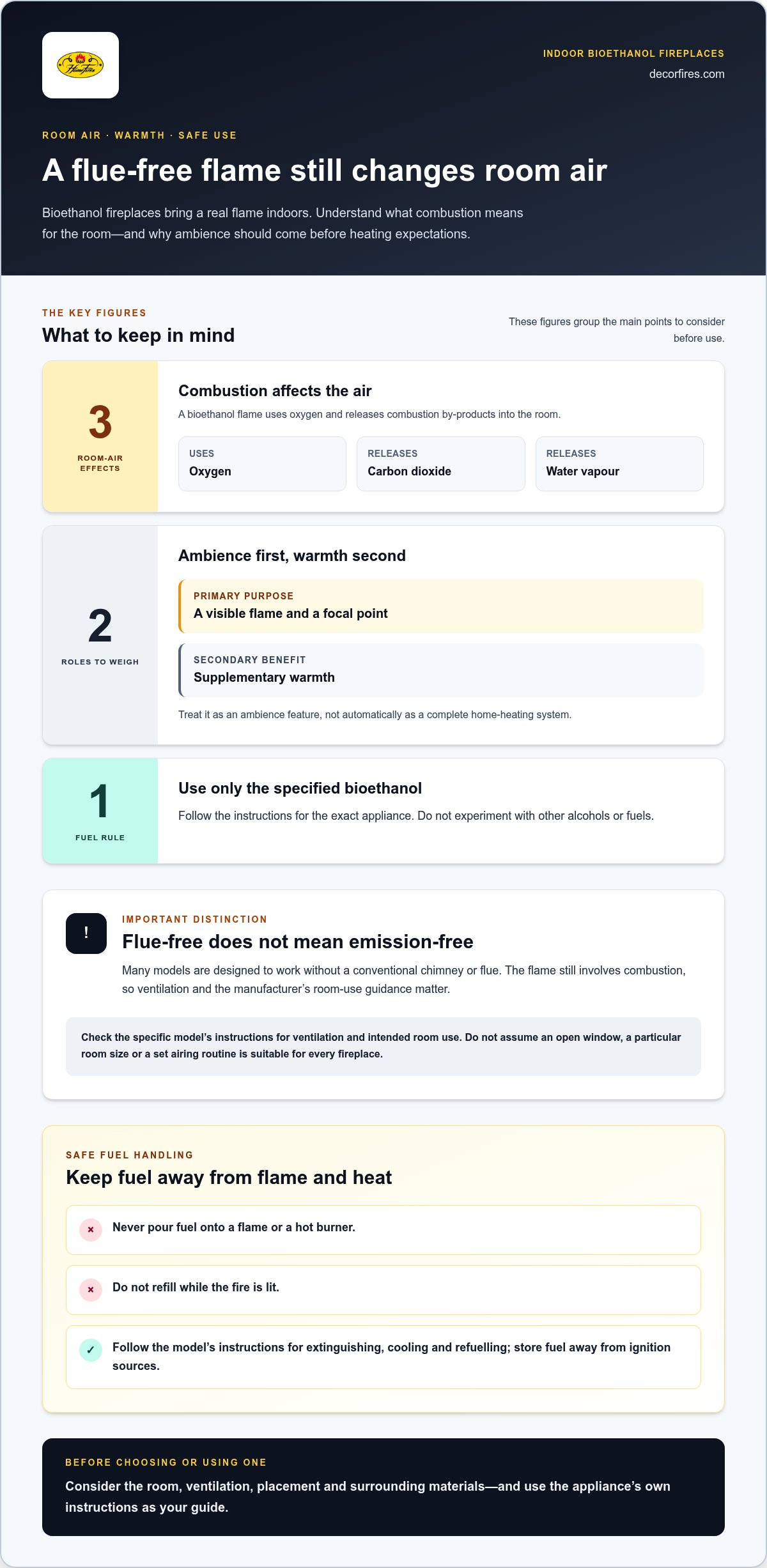
What if a fireplace’s greatest strength is the atmosphere it creates, rather than the heat it promises? If “bioethanol fireplace indoor” is on your shortlist, the appeal is easy to understand: a real, dancing flame can bring a room to life without a conventional chimney. But a flue-free fire still affects the air around it. Burning bioethanol uses oxygen and releases carbon dioxide and water vapour, so ventilation matters, as does careful handling of liquid fuel.
It’s sensible to ask whether this kind of flame will warm your living space, how it fits into everyday use and what precautions come with lighting and refuelling it. Bioethanol fireplaces can add warmth, but they’re best treated as ambience-first features rather than dependable whole-room heaters.
This guide explains how the fuel and flame work, what to consider for room air and safe use, and which practical questions can help you decide if one suits your home. It also sets out what to expect from the warmth and how Decor Fires’ bioethanol fireplaces and selection guidance fit into your decision.
Key Takeaways
- Understand how an indoor bioethanol fireplace creates a visible flame and why its fuel affects room air.
- Set realistic expectations by weighing the flame’s ambience against supplementary warmth and primary space heating.
- Decide whether you want a focal point, added warmth or both before comparing fireplace options.
- Use the appliance’s instructions to assess placement, clearances, surrounding materials, ventilation and safe fuel handling.
- Explore Decor Fires’ bioethanol fireplace range with expert advice on selection and installation.
What is an Indoor Bioethanol Fireplace and its Purpose?
An indoor bioethanol fireplace burns bioethanol fuel in a burner to create a visible flame. Its appeal lies in the immediate presence of fire: the glow can bring a living room or open-plan space together, adding a focal point without the traditional fireplace surround and chimney that some homes cannot accommodate.
A bioethanol fireplace uses liquid bioethanol as its fuel, produces a real flame through combustion, and is intended primarily to create atmosphere, with warmth as a secondary benefit. That distinction helps set expectations. The flame can make an evening feel more welcoming, but the fireplace should not automatically be treated as a complete home-heating system. Think of it as a considered design feature that also gives off heat.
Depending on the model, a fireplace may be built into a wall, mounted or freestanding. Each style offers a different way to shape a room, but flexibility does not mean placement is unrestricted. The appliance’s design and instructions determine where it can be used and how it should sit in the space. For a bioethanol fireplace indoor installation, consider sightlines, nearby furnishings and how the flame will fit into the room’s everyday use.
How does an indoor bioethanol fireplace differ from a flued fireplace?
Many bioethanol models are designed to operate without a conventional chimney or flue. This can make a fireplace-style focal point possible in homes where a traditional chimney is impractical. However, “flue-free” describes the lack of a flue, not a flame without combustion by-products. Burning bioethanol consumes oxygen and produces carbon dioxide and water vapour, so it should not be described as emission-free. The general Ethanol fireplace overview also explains common designs and how they work.
Installation requirements and operating guidance vary between appliances. Don’t assume that one fireplace’s setup applies to another. Read the manufacturer’s instructions for the exact model, including its requirements for the room and its use. Treat that guidance as part of choosing a fireplace, not a detail to leave until after installation.
Where can a bioethanol fireplace add atmosphere?
In a living room, the flame can draw the eye towards a seating area. In a larger shared space, it can help define a gathering point. Consider what will be visible from the sofa, dining table or main entrance, and whether the fireplace complements the room’s proportions rather than competing with them. These are design possibilities, not promises about how much the room will warm.
Start with the experience you want: a relaxed evening focal point, a striking feature that anchors the interior, or a balance of visual appeal and supplementary warmth. Once that purpose is clear, it’s easier to consider the right style and position. The appliance’s instructions remain the guide to safe indoor use.
How an indoor bioethanol fireplace burns fuel and affects room air
The flame begins with the fuel. Use only the type of bioethanol specified for the appliance, add it to the burner as the instructions direct, then ignite it using the prescribed method. A bioethanol burner is not a place to experiment with other alcohols or fuels. The appliance’s guidance should also explain how to extinguish the flame and when it is safe to handle or refill the burner.
Combustion is fuel reacting with oxygen to release heat and light. As bioethanol burns, it consumes oxygen and creates by-products, including carbon dioxide and water vapour. This is why “flue-free” must not be taken to mean “emission-free” or harmless to indoor air. Room conditions and combustion details depend on the appliance’s design and how it is operated. Check reliable, model-specific information before relying on precise claims about emissions or air quality.
What happens when bioethanol burns?
In simple terms, liquid fuel burns at the burner, producing the visible flame, heat and combustion by-products. The flame may look clean compared with a wood fire, but appearance alone cannot tell you what is entering the room air. Burner construction, fuel and operating conditions matter, so don’t assume every appliance performs identically or make precise claims without manufacturer information.
Ventilation and manufacturer guidance matter indoors because a flue-free flame still consumes oxygen and releases combustion by-products into the room. Follow the instructions for the specific model, including any stated ventilation requirements, rather than relying on a general rule for all fireplaces.
Does a vent-free bioethanol fireplace still need ventilation?
Yes. The absence of a conventional flue does not remove the need to use the fireplace as instructed for its room. Don’t assume that an open window, a particular room size or a set airing routine is suitable for every model. Check the manufacturer’s directions for ventilation and intended room use, and include those requirements in your installation plans.
Liquid-fuel flames also need careful handling. Never pour fuel onto a flame or a hot burner, and don’t refill while the fire is lit. Follow the manufacturer’s instructions for extinguishing, cooling and refuelling the appliance, and store fuel safely away from ignition sources. These steps depend on the fireplace and fuel being used, so follow the model’s instructions rather than relying on general advice.
For a bioethanol fireplace indoor, room-air considerations belong in the decision from the outset, alongside appearance and placement. If you’re weighing designs, explore Decor Fires’ bioethanol fireplaces as part of planning a comfortable, considered interior.
Bioethanol fireplace warmth versus ambience: what should you expect?
A bioethanol flame offers the atmosphere of a real fire and releases some heat. The useful question is how you want that warmth to serve the room. Treat the fireplace first as a visual feature, then consider its heat output as a possible addition to comfort. Don’t assume it will replace your home’s main heating system.
| Role | What to expect |
|---|---|
| Ambience | A visible flame that can create a welcoming focal point and shape the mood of a room. |
| Supplementary warmth | Some added warmth nearby, with the effect dependent on the appliance and the room. |
| Primary space heating | Not a role to assume; bioethanol fireplaces are generally intended as decorative appliances, not as a home’s main heat source. |
Flame appeal alone cannot establish whether a fireplace is suitable for heating your room. A tall, bright flame may be striking, but appearance doesn’t tell you how much heat the model produces or how comfortably that heat will reach the areas you use. Look for the manufacturer’s heat-output information for the specific appliance, rather than judging from photographs, flame size or a general claim about the category.
Comfort also depends on the room. Its size and layout, how open the space is, and how warmth is distributed all affect what you feel. A seating area close to the flame may feel different from a dining space across an open-plan room. Don’t assume a particular temperature change without verified details for the appliance and the conditions in which it is used.
Can a bioethanol fireplace heat a room?
It may contribute warmth, but the result depends on the model and room. Distinguish a local sense of comfort, such as enjoying the fire while seated nearby, from heating an entire room evenly. Before including a fireplace in a heating plan, compare the manufacturer’s stated heat output with your needs. Use figures only when they’re verified for that exact model.
When is ambience the stronger reason to choose one?
Ambience is likely to matter most if you want a visible flame to anchor an interior, add interest to an evening gathering or create a focal point in a living area. If consistent primary heating is your priority, don’t let the beauty of the flame stand in for evidence of heating performance. Choose according to the role you need the fireplace to play.
For a bioethanol fireplace indoor, decide whether the flame itself is the main attraction or whether you’re also counting on supplementary warmth. Then assess the model’s verified heat-output details alongside the room where it will sit. This keeps expectations grounded while leaving room for the pleasure of a real flame: an inviting feature chosen for its appearance and the comfort it can reasonably add.
A practical indoor bioethanol fireplace checklist for room, fuel and safe use
A considered choice starts with how you want the fire to fit into daily life. Before settling on a design, work through the room, the appliance instructions and the routines involved in using liquid fuel. These checks help you compare options against both your space and the way you intend to enjoy the fireplace.
- Decide its role. Is your priority a focal flame, supplementary warmth, or a combination? Keep that purpose in view as you compare designs. Don’t assume a fireplace intended mainly for atmosphere will meet your primary heating needs.
- Picture the room in use. Consider where you’ll view the fire from, how people move through the space, and whether the proposed position works with your furniture. A location that looks balanced from the sofa should also be practical during everyday activities.
- Check placement requirements. Use the model’s instructions to assess clearances, installation and the suitability of the intended position. Consider nearby walls, furnishings and other surrounding materials. Don’t transfer one model’s measurements or placement guidance to another.
- Plan for the room’s conditions. Take the room layout and intended use into account, then follow the manufacturer’s directions for indoor operation and ventilation. Avoid relying on general assumptions about room size or airflow when the appliance gives specific guidance.
- Identify the correct fuel. Use only the fuel approved for that appliance. Store it securely, away from ignition sources and in accordance with its packaging and the fireplace instructions. Never substitute a different fuel because it appears similar.
- Understand the operating routine. Read the steps for lighting and extinguishing the flame, and learn how the appliance must cool before refuelling. Never add fuel to a lit or hot burner. Follow the model’s instructions for safe handling and refuelling.
- Think about supervision. Choose a stable, suitable position and keep the flame in view during use. Make sure the arrangement fits your household’s routines, including the presence of children, pets or frequent movement nearby.
These practical details are part of the design decision, not an afterthought. Once you know what the room can accommodate and what the operating routine involves, it’s easier to compare styles with confidence. Explore indoor fireplace options as you consider which feature will feel at home in your space.
What should you assess before choosing a model?
Start with the room’s layout and your preferred viewing position, then picture how the fireplace will be used during an ordinary evening or when guests gather. Compare those needs with the model’s placement and clearance instructions. A clear view of the flame may be appealing, but it should work alongside the room’s furnishings, movement and intended use.
Which everyday safety habits matter?
Follow the appliance’s instructions for ignition, extinguishing, cooling and refuelling, and use only its approved fuel. Ensure the fireplace is stable in its intended position, keep fuel away from ignition sources, and supervise the flame. For a bioethanol fireplace indoor, safe use depends on following the guidance for the specific model each time you operate it.
Choosing an indoor bioethanol fireplace with Decor Fires
The right choice brings together three things: the experience you want, the room you have and the role you expect the flame to play. Before comparing designs, decide whether you’re choosing a focal point, looking for supplementary warmth or hoping for both. Keeping those priorities in view helps you weigh a fireplace’s visual appeal against its practical requirements.
How to turn your priorities into a considered choice
Start with the room and how you use it. Think about where the flame will be seen, the available layout and how the fireplace will fit around furnishings and daily movement. Then set realistic expectations for warmth. An ambience-led feature shouldn’t be treated as a primary heating system without verified information that supports that role.
- Intended use: Decide whether atmosphere, supplementary warmth or a balance of both matters most.
- Room context: Consider placement, viewing position and the surrounding materials.
- Operating guidance: Compare each model’s stated requirements for installation, fuel, ventilation and use.
- Everyday routine: Make sure you’re comfortable following its instructions for lighting, extinguishing, cooling and refuelling.
Instructions are part of the comparison, not fine print to leave until later. Appliance designs differ, so use the guidance for each specific model rather than assuming that clearances, fuel or room-use requirements are interchangeable. For a bioethanol fireplace indoor choice, matching the stated operating requirements to your space is as important as finding a style that feels at home there.
What to expect from Decor Fires
Decor Fires sells indoor bioethanol fireplaces and provides expert advice on fireplace selection and installation. That guidance can help you weigh practical priorities alongside the look you’re drawn to, so your decision reflects how the room is arranged and how you plan to use the fire.
A considered choice doesn’t need to chase the largest flame or promise more warmth than the appliance is designed to provide. Weigh the manufacturer’s instructions and verified details against your room, expectations and the atmosphere you want to create. If dependable primary heating is your main requirement, keep that need distinct from the appeal of a decorative flame.
Once those priorities are clear, explore the bioethanol fireplaces at Decor Fires and consider which option suits your home. Thoughtfully chosen, a real flame can bring a welcoming centre to a room, making ordinary evenings feel more relaxed and shared moments feel warmer.
Choose a flame that feels at home
Picture how you want the room to feel on an ordinary evening, not only how the fireplace will look when first installed. Think about where you naturally gather, what you’d like the flame to bring to that space, and how its care will fit into your household’s routines. If “bioethanol fireplace indoor” is the feature you’re considering, let those everyday details guide your choice.
A considered fireplace should suit both the character of your home and the way you plan to use it. Decor Fires sells bioethanol fireplaces and offers expert advice on selection and installation, helping you weigh the design against your priorities as you shape a welcoming interior.
Explore the styles available for your home and start picturing a welcoming focal point for the moments you love to share. Explore indoor bioethanol fireplaces at Decor Fires.
Frequently Asked Questions
Is a bioethanol fireplace safe to use indoors?
It can be used indoors when the appliance is intended for indoor use and operated according to its manufacturer’s instructions. For a bioethanol fireplace indoor installation, follow the specified placement, ventilation and clearance guidance, use only approved fuel, and supervise the flame. Burning bioethanol uses oxygen and releases carbon dioxide and water vapour, so a flue-free design doesn’t mean combustion has no effect on room air.
Can a bioethanol fireplace work without electricity?
Some manually operated models may work without mains electricity, but this depends on the appliance. A fireplace with powered ignition or electronic controls may need an electrical supply for those features. Check the manufacturer’s product information and operating instructions to see what the specific model requires. If you want a flame during a power cut, establish whether the appliance can be lit and controlled safely without power before relying on it.
How much fuel does an indoor bioethanol fireplace use?
Fuel use varies by appliance, burner and operating conditions, so there isn’t one reliable amount for every fireplace. Look for the manufacturer’s stated consumption rate and fuel capacity for the model you’re considering, then use those details to understand its expected use. Actual burn time can vary with operating settings. Don’t estimate from another model’s figures, and always use the fuel type specified in the instructions.
What happens if the flame goes out while the burner still contains fuel?
Treat the burner as containing fuel, even if you can no longer see a flame. Don’t add fuel or attempt to relight it immediately. Follow the appliance instructions for checking that the flame is fully extinguished, allowing the burner to cool and restarting safely. Keep other flames and ignition sources away during this process. If you’re unsure what to do, stop and consult the model’s instructions before handling it.
Is bioethanol a renewable fuel?
Bioethanol can be made from biomass, which is a renewable feedstock, but that doesn’t make every fuel’s production or sourcing identical. The material used and how it is produced matter when considering its environmental credentials. Avoid assuming that renewable means emissions-free: burning bioethanol still produces combustion by-products. Check fuel information and use only the type approved for your fireplace, rather than choosing a fuel solely on broad environmental claims.
Can an indoor bioethanol fireplace also be used outdoors?
Only use it outdoors if the manufacturer explicitly states that the specific appliance is suitable for outdoor use. An indoor model may not be designed for outdoor conditions such as wind or exposure, and its safe placement requirements may differ. Don’t move a lit or hot fireplace outside. Check the instructions for permitted locations and operation, and keep the intended use within those directions.