
Suspended Ceiling Fireplace: Design, Function and Planning

What if your fireplace could feel less like a fixture against the wall and more like a sculptural centrepiece within the room? A suspended ceiling fireplace creates that striking, floating look, but choosing one involves practical questions: how it is supported, where the flue runs and whether its heat output suits the room. With those details considered early, you can plan a distinctive design without losing sight of everyday comfort.
This guide explains how suspended fireplaces work, what sets them apart and what to consider before choosing one. Compare fuel options and appliance specifications, then think through room layout, ceiling support, flue routes and clearances. Requirements vary by model, so use the manufacturer’s guidance when planning support, venting and installation. Decor Fires sells and installs suspended fireplaces, with expert advice to help you choose an appliance and plan its installation.
Key Takeaways
- A suspended ceiling fireplace hangs visually from above, creating an airy focal point with open space beneath the firebox.
- “Suspended” describes the fireplace’s placement, not its fuel or operating method; appliance details vary.
- Position the fireplace to preserve clear sightlines and comfortable circulation, while considering how the room will be used.
- Plan in sequence: choose an appliance, assess the room, then coordinate ceiling support and flue requirements with a suitably qualified professional.
- Compare documented appliance specifications with your fuel preference and heating expectations before settling on a design.
What Is a Suspended Ceiling Fireplace, and What Makes It Distinctive?
A suspended ceiling fireplace appears to hang from above rather than rest on the floor. Its firebox becomes a sculptural feature, while the open space beneath can make the overall arrangement feel lighter than a solid, floor-standing design. The effect can be striking without overwhelming the room: furniture, finishes and views through the space still have room to breathe.
A suspended fireplace is defined by its elevated, visually floating position, whilst its fuel, firebox design and installation arrangement depend on the individual appliance. “Suspended” describes the form, not a single way of creating or venting a fire. For a broader introduction to fireplace types and components, see Fireplace - Wikipedia.
Rather than being built into a wall or enclosure, the firebox is presented as a visible object within the room. A flue or other connecting elements may contribute to the design, though their appearance and arrangement vary. The open area below can help keep views across an open-plan space clear. Position the fireplace carefully so it works with seating, walkways and surrounding finishes.
How Does a Suspended Fireplace Differ from Other Designs?
A freestanding fireplace rests on the floor, while a built-in model sits within a wall or purpose-designed enclosure. A wall-mounted fireplace is fixed to a wall, creating a different relationship with the room’s vertical surfaces. By contrast, a suspended design draws the eye towards the ceiling and leaves space beneath the firebox. This can help preserve sightlines across a lounge or open-plan living area. Support, fuel and flue arrangements vary by appliance, so don’t assume one design represents them all.
Why Do Homeowners Choose a Suspended Fireplace?
The appeal is partly visual: a fireplace that seems to float can give a furnished room a memorable centrepiece without closing off the floor beneath it. In a space where people gather on different sides of the fire, the open form may also help maintain a sense of connection. Its sculptural presence can suit restrained interiors as well as more expressive ones, depending on the appliance and surrounding materials.
Consider that striking look alongside everyday use. Where will people sit? How will they move through the room? Will the fireplace interrupt a valued view? A suspended ceiling fireplace also brings ceiling support and flue planning into the design process. Consider it both as a focal point and as a functional part of the room, so its presence feels welcoming as well as well resolved.
How Does a Suspended Fireplace Work? Understand the Firebox, Fuel and Flue
The visible flame sits within a firebox, the chamber designed to contain the fire. Its shape, opening and materials differ between appliances, so two suspended fireplaces need not look or work alike. The firebox connects to the fuel and ventilation arrangements specified for that design. The appliance documentation is therefore an essential reference when planning.
Suspension describes where a fireplace sits in the room; fuel describes how its fire operates. A suspended ceiling fireplace is not tied to one fuel or operating method. Wood-burning and gas options exist across the wider fireplace category, but that doesn’t mean every suspended model supports both. Choose according to the specifications of the individual appliance, not its appearance alone.
What Fuel Options Can a Suspended Fireplace Use?
A visible wood fire brings the movement and changing glow of burning logs, while other fuel choices may suit households looking for a different operating experience. These are broad considerations, not guarantees about a particular suspended design: fuel compatibility is model-specific. Compare the manufacturer’s stated fuel, operating instructions and heating information, then consider how the appliance fits your routine and the room.
Why Do the Flue and Venting Matter?
Combustion produces gases that need a suitable route away from the living space. A flue provides that route, and its design and position depend on the appliance, the home and the planned installation. With a ceiling-hung fireplace, the route may be visually prominent, so consider how it will look as well as how it will function. Follow the appliance documentation for flue, clearance and installation requirements.
Before settling on a design, bring these details into the same conversation:
- Fuel: Check which fuel the specific appliance is designed to use.
- Firebox: Review the manufacturer’s description of its operation and configuration.
- Flue route: Consider how exhaust gases will be directed out of the home and how the route relates to the ceiling and roof.
- Installation conditions: Have the ceiling structure and the appliance’s stated support and clearance requirements assessed as part of planning.
These elements work together. Changing the appliance may change the flue route and installation plan, so don’t leave venting until after choosing the fireplace. Decor Fires sells suspended fireplace options and provides product-selection and installation advice, helping you match the design you want with the specifications your home needs.
Is a Suspended Ceiling Fireplace Practical? Balance Room Design and Everyday Use
A sculptural fireplace can be practical when the room and installation are planned together. Its position affects more than the view: it can shape furniture placement, routes between seating and adjoining spaces, and how comfortable the fire feels in daily life. Instead of asking only where it will look striking, consider how the room will work around it.
Assess the fireplace alongside the room’s proportions and how you use the space. A central position may create a natural gathering point, but it can also affect routes between a lounge, dining area and doorway. Positioning it closer to one zone may preserve movement elsewhere, while changing how visible the fire is from the rest of an open-plan home. Neither arrangement is automatically right. The goal is a balance that feels inviting and lets the room function naturally.
Which Room Layouts Suit a Suspended Fireplace?
Room shape, ceiling height and sightlines all help guide placement, but there is no universal ceiling-height rule for every appliance or home. Look at the room from the places where people will gather, including adjoining spaces. Check whether the proposed position keeps the fire in view without obstructing conversation, circulation or a valued outlook. Sketching furniture placement can make these trade-offs easier to assess before choosing a final position.
Use these prompts to compare priorities:
| Room priority | Design question |
|---|---|
| Central focal point | Will seating face the fire naturally, with comfortable routes around the gathering area? |
| Open sightlines | Can people see across the room and from adjoining spaces without the fireplace interrupting a key view? |
| Easy circulation | Does the proposed position leave everyday paths between doors, seating and other zones clear? |
| Balanced proportions | Does the appliance’s scale feel in harmony with the room and ceiling, according to its specifications? |
Can a Design Centrepiece Also Provide Useful Warmth?
A suspended fireplace can be both a visual anchor and a source of warmth, but appearance alone won’t tell you how well an appliance will heat a particular room. Suitability depends on its documented heat output, the room’s characteristics and the wider layout, including how the space connects with adjoining areas. Consider heating needs separately from the pleasure of watching a fire, then weigh both before choosing a model.
For a broader explanation of how output relates to choosing a fireplace, explore this closed-combustion fireplace heat-output guide. It can help frame the questions to consider, while the chosen suspended appliance’s own documentation remains central to assessing suitability. A thoughtful plan lets the room retain its open, welcoming feel while giving the fireplace a practical role as well as sculptural appeal.
What Should You Plan Before Installing a Suspended Ceiling Fireplace?
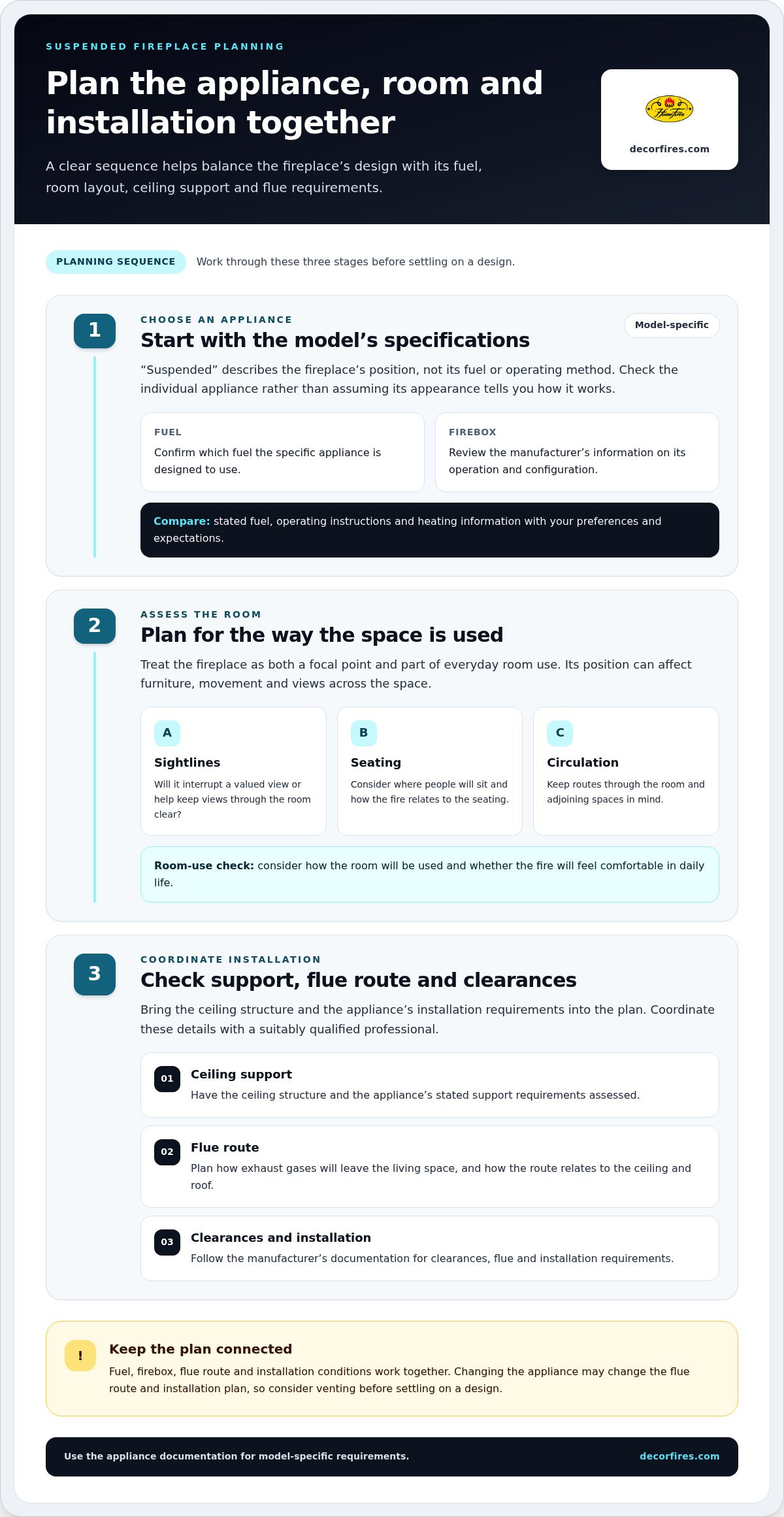
A successful installation begins well before the fireplace takes its place in the room. Plan in sequence: select the appliance, assess the space, then coordinate ceiling support and the flue arrangement around its documented requirements. This brings design and practical decisions together early, rather than forcing the room or installation plan to adapt at the last moment.
For a suspended ceiling fireplace, the chosen appliance’s manual is a key planning reference. It sets out model-specific information, which may include support, clearances, flue requirements and access for operation or maintenance. Don’t rely on a measurement or installation detail from another fireplace, even if it looks similar. A suitably qualified professional should assess the ceiling structure and installation conditions against the documentation before work proceeds.
- Choose the appliance: Review its documented fuel, support, flue and clearance requirements.
- Assess the room: Consider the ceiling, nearby finishes and furnishings, access, furniture layout and intended position.
- Coordinate the installation: Align the appliance location, flue route and ceiling design, and check relevant building and safety requirements for the project.
How Do Ceiling Support and Room Clearances Affect Planning?
The ceiling structure must be suitable for the selected appliance and its support system, so its condition and construction need professional assessment. Take clearances from the model’s manufacturer documentation rather than applying a general rule. Include nearby furniture, curtains and finishes in the room review, and consider how people will use the surrounding space. This matters particularly when the fireplace is near seating or a frequently used route.
What Should Be Coordinated Before Installation Begins?
Plan the appliance position, flue route, ceiling design and room layout together. The chosen location can affect how the flue is integrated and whether the ceiling design needs to accommodate it. The installation should follow the appliance’s instructions and account for relevant building and safety requirements. Early coordination helps avoid treating support, access or clearances as afterthoughts.
These principles also apply to other fireplace projects, although the details depend on the appliance and installation. The built-in fireplace installation planning guide offers related considerations to keep in mind as you organise your project.
Explore Decor Fires’ suspended fireplaces and get product-selection and installation advice to bring your preferred design into a considered plan.
How to Choose a Suspended Fireplace That Suits Your Home
Start with how you want the room to feel and function, not simply with a striking image. You might want a suspended ceiling fireplace as a sculptural centrepiece, a source of everyday warmth, or a considered blend of both. Once you know its purpose, compare your preferred fuel and visual details with the appliance’s documented requirements and the installation plan for your home.
Use this sequence to turn inspiration into a practical shortlist:
- Define the room’s purpose: Decide whether the fireplace is for a frequently used family space, a quieter retreat or an area where people gather.
- Set your visual priorities: Consider its position, how it will look from different parts of the room and which design details matter to you.
- Choose a fuel preference: Explore options that suit your household, then check which fuel the specific appliance is designed to use.
- Clarify heating expectations: Compare the appliance’s documented output with the room and the way the surrounding spaces are arranged.
- Review the installation plan: Bring the appliance specifications together with the ceiling, support and flue requirements for your project.
Which Questions Help Clarify Your Fireplace Priorities?
Ask yourself what matters most: a floating focal point, a warm gathering place, or both. Think about how the room is used throughout the day, which fuel preference fits your routine and how the fire should sit alongside furniture and finishes. Then distinguish the details you’d like from the essential requirements for operating and installing the appliance. This makes comparisons more useful than judging appearance alone.
How Can Specialist Advice Bring the Plan Together?
Product guidance can help connect an appliance’s documented fuel, output and installation requirements with your room priorities. Installation advice can bring the ceiling and flue plan into the same conversation, so design choices and practical needs are considered together. Decor Fires sells and installs suspended fireplaces and offers expert product-selection and installation advice to help you make these decisions.
Start with a simple design vision: the atmosphere you’d like to create, where people will gather and the details that make the room feel like home. From there, informed choices can shape a fireplace plan that feels personal and considered. Explore suspended fireplace options as you begin shaping yours.
Shape a Fireplace Plan Around the Way You Live
Begin with the feeling you want your home to hold: an open, sculptural centrepiece for shared evenings, a comfortable source of warmth, or a thoughtful balance of both. A suspended ceiling fireplace can bring that vision to life. Choose with both the design and the way you use the room in mind.
As you explore possibilities, consider your preferred look alongside the appliance details that shape the project. Decor Fires sells and installs suspended fireplaces and offers expert advice on selection and installation planning, helping you turn early inspiration into considered choices for your home.
Explore suspended fireplace options with Decor Fires and take the first step towards creating a welcoming place to gather.
Frequently Asked Questions
Can a suspended fireplace rotate?
Some suspended fireplaces are designed to rotate, but rotation isn’t a feature of every model. If turning the fire towards different seating areas matters to you, look for that function in the appliance’s specifications and operating instructions. Consider how movement relates to the flue and surrounding space; don’t assume the firebox can be turned freely after installation. Follow the manufacturer’s guidance for using any rotating feature.
Can a suspended fireplace be installed in an existing home?
Yes, a suspended fireplace may be possible in an existing home, depending on the appliance and building conditions. A retrofit assessment should consider the ceiling structure, access above the ceiling, the flue route and any existing services in the way. For example, a finished ceiling may need alterations to accommodate support or venting. Include these practical details in the installation plan before settling on a position.
Does a suspended fireplace need electricity?
It depends on the appliance. Some models may use electrical components for functions such as ignition or controls, while others may operate without them. Fuel type alone doesn’t establish the power requirements, so check the chosen fireplace’s specifications and installation instructions for electrical connections. If you’re planning a new room layout, consider any stated power needs alongside the appliance position rather than assuming a nearby socket will be suitable.
How do you clean a suspended fireplace?
Clean it only as directed in the appliance’s instructions, and make sure it has cooled fully before carrying out routine care. The appropriate method varies with the fuel and model: a wood-burning appliance may have different cleaning needs from a gas or bioethanol one. Check the manual for guidance on ash, glass and exterior surfaces, including suitable materials and products. Avoid using cleaners or tools the manufacturer doesn’t recommend.
Can a suspended fireplace be used with a ceiling fan?
It may be possible, but the arrangement must suit the specific fireplace and fan. A fan changes air movement in the room, and its position may affect clearances or the way the fireplace is used. Check both appliances’ instructions and include the fan’s blades and circulation pattern in the room plan. If you’re renovating, plan their placement together so neither becomes an afterthought.
Can a suspended fireplace hang beneath a low ceiling?
Possibly, but there’s no single ceiling height that works for every suspended fireplace. The selected model’s installation instructions set out the relevant clearances and positioning requirements, which need to be assessed against the actual ceiling and room. A suitably qualified professional can assess those conditions before installation is planned. If the intended position doesn’t meet the appliance’s requirements, the design or fireplace choice may need to change.