
Cheapest Heating Solution for a Home in South Africa: A 2026 Comparison

The cheapest heater to buy could become the most expensive way to keep a room warm. If you’re searching for the cheapest heating solution for home in South Africa, the real answer depends on more than the price on the box. Electricity tariffs, fuel costs, room size and how long you heat each space all affect the total.
It’s understandable to focus on the upfront cost, especially when winter puts extra pressure on household budgets. But a low purchase price doesn’t always mean low running costs, and an option that suits a small bedroom may not be practical for a living area used throughout the evening. The best choice is the one that provides the warmth you need at the lowest realistic whole-life cost.
This comparison looks at purchase, running and practical costs across common heating options. Use the same room, heating schedule and current energy prices when comparing them, then consider how fuel access and your household’s routine affect the result. Electric heaters, heat pumps, gas and fireplaces can suit different homes, but no single option guarantees savings for everyone.
Key Takeaways
- The cheapest heating solution for home in South Africa depends on your room, heating habits and energy source, not just the appliance price.
- Estimate running costs from appliance input, hours of use and your current electricity tariff or fuel price.
- Electric heaters, heat pumps, gas and fireplaces differ in suitability and the practical costs to consider.
- Match the option to your household’s needs, whether you heat one room occasionally or want regular warmth.
- Built-in, freestanding, pellet, gas and bioethanol fireplaces are among the options to explore, with product advice available to help assess what may suit your space.
What is the cheapest heating solution for a home in South Africa?
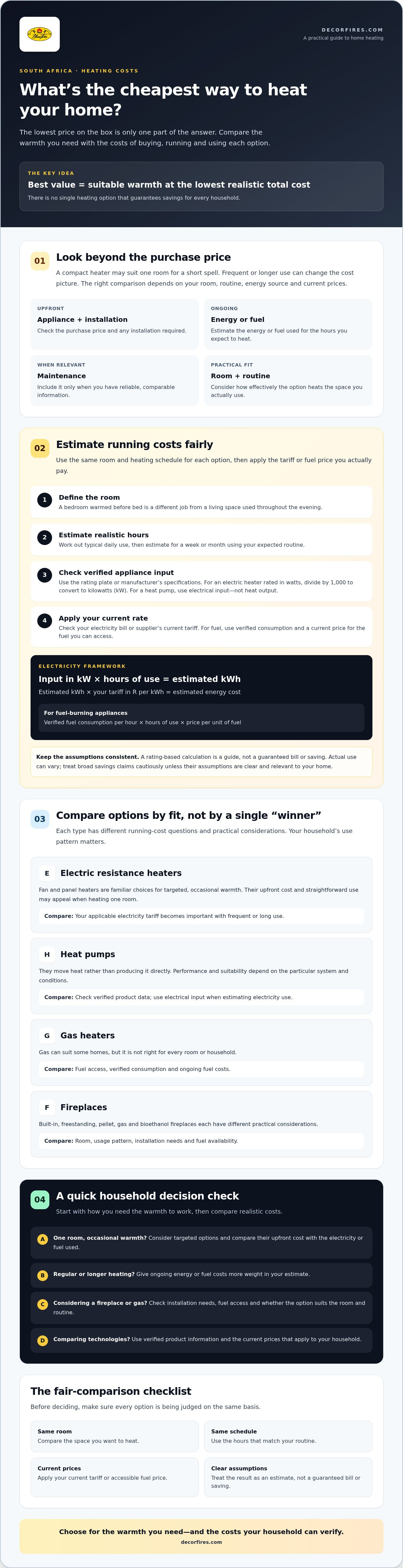
The cheapest heating solution for a home in South Africa is the option that provides suitable warmth at the lowest realistic total cost, not necessarily the one with the lowest purchase price. Compare the appliance and installation, electricity or fuel, any relevant maintenance, and how effectively the system heats the space you use.
A compact electric heater may be an affordable way to warm one room for a short spell, but frequent use can add to electricity costs. A higher initial outlay may make more sense for a household that heats regularly, provided the running costs and installation requirements suit the home. There’s no single winner for every household: room size, insulation, climate, current tariffs and access to fuel all affect the comparison.
What costs belong in a fair heating comparison?
Separate upfront costs from ongoing ones. First, check the appliance price and any required installation. Then estimate the energy or fuel it will use for the hours you expect to heat the room. Include maintenance only when you have reliable, comparable information. Also consider how much of the room the appliance can comfortably heat: a low-cost option may be poor value if it needs to run for longer or doesn’t suit the space.
For a like-for-like comparison, use the same room and heating schedule, and apply your current tariff or fuel price to each option. Treat the result as an estimate because appliance input, household behaviour and tariffs can vary. Be wary of broad savings claims unless the assumptions behind them are clear and relevant to your home.
Which home-heating options should South African households compare?
Electric resistance heaters, including fan and panel heaters, are familiar choices for targeted, occasional warmth. Their upfront cost and straightforward use may appeal when you only need to heat one room. If you expect to use one frequently or for long periods, your applicable electricity tariff becomes an important part of the calculation.
Heat pumps work differently from resistance heaters by moving heat rather than producing it directly. Performance and suitability depend on the particular system and conditions, so check verified product data before assuming a heat pump will cost less to run. For a broad introduction to types of heating systems, see how different technologies deliver warmth.
Gas heaters and fireplaces also belong in the comparison, but neither suits every room or household. For gas, consider fuel access and ongoing fuel costs. For a fireplace, weigh the room, usage pattern, installation needs and fuel availability. Built-in, freestanding, pellet, gas and bioethanol fireplaces each have different practical considerations. Product-selection advice can help you assess which category may suit your home.
How to compare home-heating running costs in South Africa
Start with the room and your routine, then use the appliance’s verified energy input and the tariff or fuel price you actually pay. This won’t predict your exact bill, but it gives you a fairer comparison than judging heaters by purchase price or headline efficiency alone.
A simple running-cost method
- Define the room. Note which room you want to heat and how it’s used. A bedroom warmed before bed is a different job from a living space used throughout the evening.
- Estimate realistic hours. Work out how long the heater will run on a typical day, then calculate for a week or month using your expected routine.
- Check the appliance input. Use the rating plate or manufacturer’s specifications. For an electric heater rated in watts, divide by 1,000 to convert to kilowatts (kW). For a heat pump, use its electrical input, not its heat output, when estimating electricity use.
- Apply your current rate. Check your electricity bill or supplier’s current tariff. For gas or another fuel, use the appliance’s verified consumption rate and a current price for the fuel you can access.
Electricity framework: input in kW × hours of use = estimated kilowatt-hours (kWh). Multiply the kWh by your applicable tariff in R per kWh to estimate the energy cost. For a fuel-burning appliance, multiply its verified fuel consumption per hour by hours of use, then by the price per unit of fuel. Keep the assumptions consistent when comparing options.
Why estimates and actual costs differ
A rating-based calculation is a guide, not a guaranteed bill or saving. It may assume the appliance runs continuously at its rated input, while actual use can vary as a room warms or a thermostat switches the heater on and off. Compare devices intended to provide a similar level of warmth, and use the same schedule for each. A heater used for a brief evening shouldn’t be compared with one expected to run for hours.
Room size, ceiling height, insulation and draughts all influence how much heating feels comfortable. So does the temperature you prefer. Tariff structures can include different rates at different consumption levels or fixed charges, and tariffs and fuel prices can change. Check the latest figures that apply to your household, and note the tariff, appliance input and usage hours behind your estimate.
If a fireplace is on your shortlist, its running cost is only one consideration. Think about the space, fuel access and installation requirements too. Explore fireplace options and selection advice to help assess what may suit your home.
Which heating option gives the best value for different homes?
The best value depends on what you need to warm, how often you’ll use the system and which energy sources are practical at home. Heating one occupied room is a different job from warming several rooms. Compare options against the same use case before deciding which is the cheapest heating solution for home in South Africa.
| Option | Potentially suitable use | Cost factors and practical considerations |
|---|---|---|
| Electric resistance heater | Targeted, occasional heating in a room | Compare the appliance’s input and expected hours of use with your current electricity tariff. Heat is usually local to the appliance, so don’t assume it will warm several rooms. |
| Heat pump | Regular heating where the chosen system suits the space | Check verified electrical input, installation needs and intended coverage. Performance and costs depend on the specific unit and conditions, so compare them with your tariff rather than relying on general efficiency claims. |
| Gas heater | Room heating where gas access and appliance requirements suit the household | Factor in fuel availability, current gas prices, expected consumption and any applicable installation needs. Check the appliance’s instructions and requirements for the intended room. |
| Fireplace | A chosen living space where warmth and a welcoming focal point are both valued | Fuel access, installation conditions, frequency of use and fireplace category affect overall value. A fireplace isn’t automatically suitable for every home or a whole-house heating solution. |
When might an electric heater or heat pump make sense?
An electric resistance heater can be a straightforward choice for brief, localised warmth, such as heating one room while it’s occupied. That convenience doesn’t guarantee the lowest running cost, particularly if the heater is used for long periods. Heat pumps are a distinct option, but don’t assume a particular saving or level of performance without checking verified specifications. Compare intended coverage, usage pattern and current tariff for each system.
If you need to heat several rooms, check whether the system is designed to serve that area. Including more rooms changes both the equipment required and the expected use. Insulation, draughts and your household’s preferred comfort level also affect the result.
When might a fireplace be worth considering?
A fireplace may suit a household looking for warmth in a particular room and the atmosphere of a hearthside gathering. Built-in and freestanding designs, as well as pellet, gas and bioethanol fireplaces, have different fuel, installation and space considerations. Think about how often you’ll use it and whether fuel is readily accessible. For a closer look at planning considerations, read the built-in fireplace installation planning guide.
How to choose an affordable heating solution for your household
Start with how your household uses the home, then match the heating option to your priorities. If keeping upfront spending low matters most, compare simple room heaters. If you want regular warmth, look beyond the initial outlay to ongoing energy or fuel use. If reducing reliance on electricity matters, check whether gas or a fireplace is practical for your space and routine. The cheapest heating solution for home in South Africa depends on that balance, not a single price tag.
What should you check before choosing a heater?
Measure the room you want to heat and note where people spend time during colder periods. Heating one bedroom occasionally calls for a different solution from providing warmth in several rooms each evening. Check the services already available in your home, the space for an appliance and whether installation work may be needed. For fuel-based options, consider what you can reliably access and store.
Next, compare realistic usage scenarios. Use the appliance’s verified specifications alongside your current household electricity tariff or fuel price, rather than a national estimate. Consider draughts, ceiling height and the comfort level you want. These details affect whether a heater will feel suitable in practice, even if its estimated running cost looks appealing.
How can you avoid choosing on purchase price alone?
Look at the full ownership picture: equipment, installation, energy or fuel, and any maintenance guidance provided for the appliance. Ask for clear product specifications, including intended use and operating requirements. If a fireplace is on your shortlist, suitability depends on the room, installation conditions, usage pattern and fuel access. Before deciding, make a list of the questions you need answered about your home and the appliance.
Don’t guess about safety or installation. Confirm the requirements for the specific appliance and home with appropriately qualified professionals, particularly if the choice involves gas, a flue or building alterations. A well-matched solution should provide comfortable warmth without creating avoidable practical or installation concerns.
Decision checklist:
- Am I heating one room, several rooms or only occasionally?
- Which matters most: low upfront spend, predictable use, comfort or reduced reliance on electricity?
- Do my space, household services and fuel access suit this option?
- Have I checked current tariffs or fuel prices and confirmed installation and safety requirements?
Considering a fireplace? Ask Decor Fires for fireplace product-selection and installation advice to help assess the options for your home.
Explore fireplace options with Decor Fires before making your decision
A fireplace can bring warmth and a welcoming focal point to a room, but it isn’t automatically the cheapest heating solution for home in South Africa. Suitability depends on the space, how often you’ll use it, the fuel available to your household and the installation requirements of the specific appliance. Decor Fires offers built-in, freestanding, pellet, gas and bioethanol fireplace options, along with product-selection and installation advice to help you weigh practical details alongside the look and feel.
Which fireplace categories could you explore?
Built-in fireplaces are planned as part of the room. Freestanding fireplaces are separate appliances, and their placement depends on the home and the model’s installation requirements. For either type, consider the intended location and any work needed to accommodate the fireplace before choosing a model.
Fuel also shapes the decision. Pellet fireplaces use pellets, gas fireplaces use gas, and bioethanol fireplaces use bioethanol. Don’t assume one category will be more economical or suitable without checking product specifications, fuel access and expected use. For a built-in option, think through the room and design requirements before settling on a model.
Each category raises different practical questions, so compare options against your household’s routine rather than choosing by appearance alone. A fireplace intended for occasional evenings in a living room may call for different considerations from one expected to be used regularly.
What should you ask before selecting a fireplace?
Begin with the room: where will the fireplace go, who uses that space and when do you want warmth? Then ask for the appliance’s specifications, the installation requirements for your home and the ongoing fuel considerations. Confirm relevant safety and installation needs with appropriately qualified professionals before making a decision.
Have a few details ready when seeking advice: the room’s size and layout, how often you expect to use the fireplace, your available fuel options and any constraints in the space. These details can help you assess whether a built-in, freestanding, pellet, gas or bioethanol option merits closer consideration. There’s no need to settle on a category before you understand what your home can accommodate.
For a considered next step, explore Decor Fires fireplace options and ask for product-selection advice. Compare relevant specifications and installation needs, then weigh them against your household’s comfort priorities and routine. That way, the fireplace you choose can suit the room and your plans for winter warmth.
Choose warmth that fits your home and routine
The cheapest heating solution for home in South Africa isn’t simply the appliance with the lowest purchase price. A sound comparison weighs equipment and installation alongside expected energy or fuel use, and starts with the room you need to warm and how often you’ll use it. Check your current household tariff or fuel price, and compare options using realistic, like-for-like assumptions rather than broad savings claims.
If a fireplace is on your shortlist, consider the space, fuel access and installation requirements before settling on a style. Decor Fires offers built-in, freestanding, pellet, gas and bioethanol fireplace options, plus advice on product selection and installation. Its range includes products sourced from top international and local manufacturing brands. Explore the fireplace options and ask Decor Fires for selection advice to discuss what may suit your home. Start with your household’s needs and routine, then choose the option that makes sense for your plans for winter warmth.
Frequently Asked Questions
What is the cheapest way to heat a home in South Africa?
There’s no single cheapest option for every household. The answer depends on the room you’re heating, how often it’s used, the appliance’s energy consumption, your electricity tariff or fuel price, and any installation needs. To identify the cheapest heating solution for home in South Africa, compare realistic whole-life costs using your own usage information. Check current tariffs and fuel prices before relying on example calculations.
Is a fireplace cheaper to run than an electric heater?
Not necessarily. The comparison depends on the fireplace type, fuel, appliance specifications, room and heating schedule. Compare the cost of fuel you can access with the electric heater’s estimated consumption, using current, verified prices. Include installation and maintenance where relevant. For a fair comparison, consider options that provide a similar level of warmth for a similar length of time, rather than assuming a fireplace will automatically cost less to run.
Are heat pumps cheaper to run than ordinary electric heaters?
Heat pumps use energy differently, but whether one is more economical depends on the specific equipment, room, installation, operating conditions and electricity tariff. Check comparable product specifications, including energy input and intended use, rather than relying on a general claim about efficiency. A qualified professional can help assess suitability for your circumstances. Verify technical and cost claims before treating them as a rule for every home.
How do I calculate the running cost of a home heater?
Check the heater’s rated input, estimate its hours of use, then use your applicable electricity tariff or fuel price to estimate consumption cost. For an electric heater, convert input in watts to kilowatts, multiply by hours to estimate kilowatt-hours, then apply your tariff. State your assumptions and compare appliances used for the same room and purpose. Actual costs can differ with usage, weather, insulation, settings and tariff structures.
Can a fireplace heat an entire home?
Don’t assume one fireplace will heat every room evenly. Coverage depends on the specific model, home layout, room size and installation. Some installations are intended to warm a main living space, but that doesn’t mean heat will reach bedrooms or other areas effectively. Check the manufacturer’s guidance and discuss your home’s layout with a suitable professional before choosing a fireplace or relying on it as your household’s only heating source.
Is gas or wood heating cheaper for a home?
Neither is automatically cheaper. Compare the appliance, current fuel prices, availability, expected use and installation requirements. A low equipment cost alone doesn’t establish a lower overall cost, and fuel prices can change. Estimate costs using verified figures for your own heating pattern, then consider practical factors such as fuel handling and storage, maintenance guidance and the type of warmth you want. The best fit depends on your home and routine.
What is the most affordable heater for one room?
The best-value heater for one room depends on how often you’ll use it, the room’s characteristics and the energy source available. Compare suitable appliances using their specifications and your current electricity tariff or fuel price, and include any installation needs. A heater used briefly may look different in a cost comparison from one running regularly, so calculate both scenarios if your routine varies. Don’t apply a short-use estimate to regular heating without recalculating.