
Built-In Braai South Africa: A Thoughtful Buying Guide

The best built-in braai for your home isn’t necessarily the largest one. It’s the one that suits the way you cook, the space you have and the people you gather with. For homeowners comparing built in braai south africa options, choosing well means looking beyond the firebox to the cooking routine, layout and installation plan.
Configurations, fuel options and finishes can each affect how a braai works in practice. Consider them together: how many people you usually cook for, where food will be prepared and served, and how the braai, flue and surrounding structure will fit into the space.
This guide covers the main design, cooking and installation decisions, including size, cooking features, wood, gas and combination options, and planning for indoor or outdoor settings. Decor Fires sells and installs built-in braais, with expert advice to help you compare products against your space and priorities.
Key Takeaways
- Choose cooking capacity for the gatherings you host most often, not just occasional large events.
- Compare built-in braai configurations by how you cook and how the entertaining area is laid out.
- Plan the flue route, ventilation, surrounding materials and access as part of one integrated installation.
- Weigh practical needs alongside the look and feel you want from your built-in braai in South Africa.
- Decor Fires’ built-in braai range and product-selection advice can help you match your space, cooking routine and plans.
What Is a Built-In Braai and Why Choose One in South Africa?
A built-in braai is a cooking unit fitted into a prepared structure, such as an outdoor cooking area or an indoor feature. Its position and surround are planned together, giving it a permanent place in the home rather than leaving it as a separate appliance. This can make the braai a natural gathering point, with the cook connected to the conversation and guests close by.
In South Africa, a braai is often part of how people mark a weekend, welcome friends or enjoy a long meal. For a broader look at the tradition and its cultural meaning, see What is a Braai? A built-in format gives this familiar ritual a dedicated setting. Whether it suits your home depends on the space, cooking habits and installation plan.
How does a built-in braai differ from a freestanding braai?
A built-in unit is incorporated into a planned structure, so its position and surrounding finish are considered together. This can create a cohesive look and a purposeful cooking zone, but the location and layout need to be decided before the structure is completed. A freestanding braai stands independently and is generally easier to reposition. If you expect your needs or layout to change, that flexibility may be useful. If you want a permanent centrepiece, a built-in design may be a better fit.
Plan how people will gather around the braai, how the cook will move between it and the preparation area, and how the feature will relate to the rest of the space. These decisions shape the experience well before you settle on finishes or cooking features.
Who is a built-in braai best suited to?
A built-in braai can suit households that cook outdoors regularly or enjoy hosting around a dedicated braai area. If afternoons often stretch into supper, a permanent cooking point can bring the space together and give the gathering a natural centre. It may also appeal if you want the braai and its surround to complement the home’s architecture and materials.
There’s no single layout for every household. A compact patio, a sheltered entertaining area and a more spacious outdoor setting each call for different choices. So do households that braai often and those that host only occasionally. If you’re researching built in braai south africa options, start with the available space, your usual routine and the intended location. A built-in braai works best when it complements the home and makes your preferred way of gathering easy.
Which Built-In Braai Features Should You Prioritise?
Start with how the braai will work on an ordinary weekend, not just how it might look on a special occasion. Think about the meals you usually prepare, who tends to gather and how much room you need to cook and move comfortably. A large cooking area is only useful if it fits the space and leaves enough room to tend the fire and serve food.
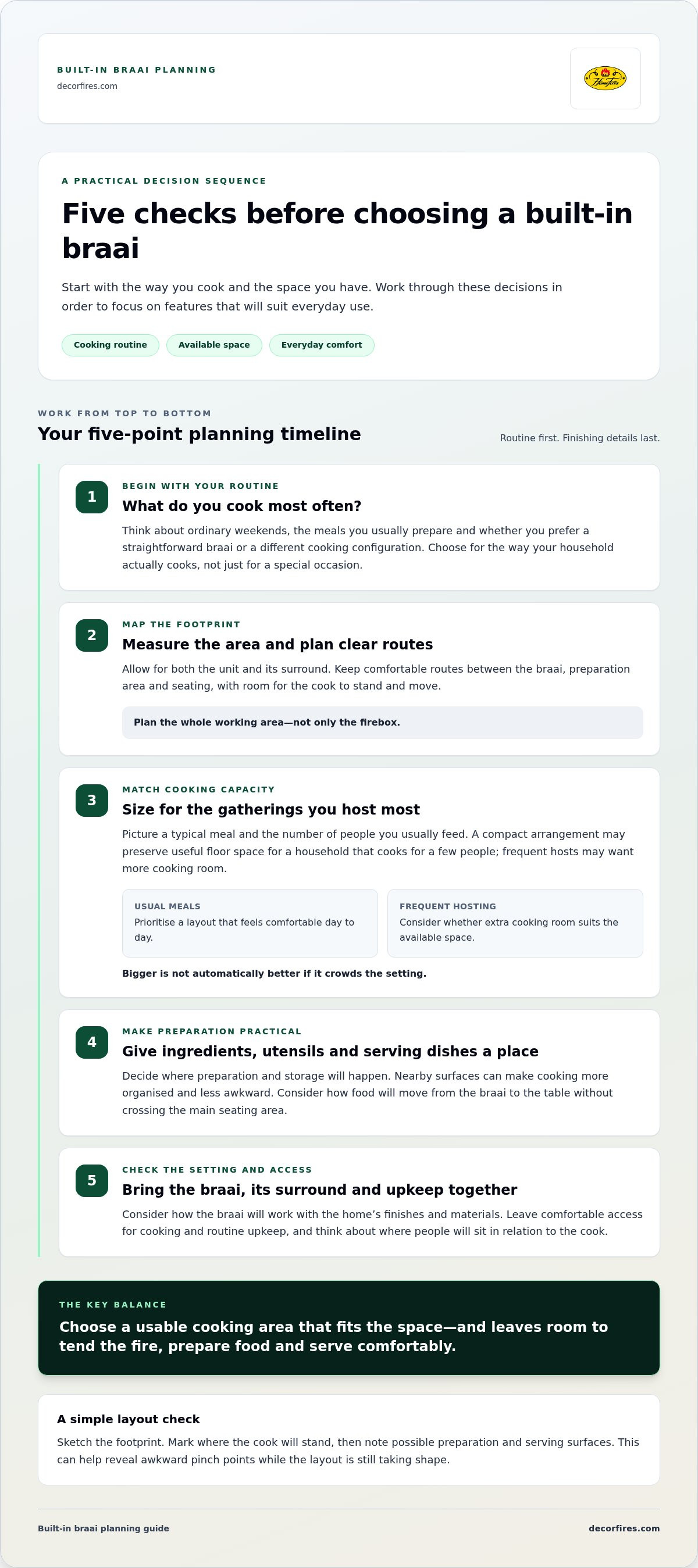
Start with space, routine and configuration. These three checks help you focus on the features that matter most in everyday use. Use this checklist before comparing built-in braai options:
- Intended use: Consider what you cook and whether you prefer a straightforward braai or a different cooking configuration.
- Available footprint: Measure the proposed area, including room for the unit and its surround. Keep clear routes between the braai, preparation area and seating.
- Cooking capacity: Picture a typical meal and the number of people you usually feed. Avoid planning around an occasional large gathering if that would make the everyday layout feel cramped.
- Preparation and storage: Decide where utensils, ingredients and serving dishes will go. Nearby surfaces can make cooking more organised and less awkward.
- Surrounding design and access: Consider how the braai will work with the home’s finishes, and leave comfortable access for cooking and routine upkeep.
How should you match braai size to your household?
Begin with the meals you cook most often and how regularly you host. A household that usually cooks for a few people may prefer a compact arrangement that preserves useful floor space, while frequent hosts may want more cooking room. Compare the usable cooking area with the space needed to stand, turn and pass dishes comfortably. Bigger isn’t automatically better if it crowds the rest of the setting.
Which everyday details make a braai easier to use?
Think through the routine from preparation to serving. Is there a practical place nearby for ingredients and utensils? Can food move easily from the braai to the table without crossing the main seating area? Consider where people will sit in relation to the cook, so conversation can flow without making the working space busy. Include access for routine upkeep and choose construction suited to regular use.
These details are easiest to resolve while the layout is still taking shape. Sketch the footprint, mark where the cook will stand and note possible locations for preparation and serving surfaces. Even a simple plan can reveal awkward pinch points before they become part of a finished structure. Compare Decor Fires’ built-in braai range with your available space and everyday cooking needs.
How Do Built-In Braai Configurations Shape the Experience?
Configuration affects more than what happens over the fire. It can influence how the cook moves between preparation and serving, where guests gather and whether the braai blends into the design or becomes its defining feature. Compare options in light of the meals you enjoy and the space you’re planning, rather than choosing by name alone.
Let your household’s cooking routine guide the configuration, so the braai supports the meals you actually make and the gatherings you enjoy hosting.
What should you consider when comparing built-in styles?
A straightforward cooking set-up may suit households that value a familiar open-fire routine. Gas and combination formats offer different approaches to cooking. The right fit depends on your preferences and the planned area. If you’re weighing fuel choices in more detail, this wood and gas guide offers related context.
| Configuration | May suit | Design consideration |
|---|---|---|
| Wood- or charcoal-focused | Households drawn to a traditional open-fire cooking routine. | Plan how the fire will be tended and how this focal point will fit into the entertaining area. |
| Gas | Those who prefer a gas-based approach to braai cooking. | Include the chosen unit and its installation needs in the overall layout. |
| Combination | Households interested in more than one cooking approach. | Consider how the configuration will fit the available footprint and the proportions of the surround. |
Use the table as a starting point, not a ranking. A household that enjoys unhurried open-fire cooking may prioritise a different arrangement from one that wants a choice of cooking approaches. In either case, consider how the configuration affects the working area and where guests naturally gather.
How can the braai complement the wider design?
Think of the surround as part of the overall composition. Brick, stone or a smoother finish can each create a different mood, while proportion helps the braai sit comfortably alongside counters, seating and the home’s existing lines. A strong focal point feels welcoming when there is still practical room to prepare, serve and sit. If you’re also planning a separate heating feature in a connected living area, a double-sided built-in fireplace may be worth considering.
When comparing built in braai south africa options, ask how the configuration will feel during an ordinary meal, not only how it will look in a finished design. Picture tending the fire, passing food to the table and welcoming guests into the space. This simple walk-through can help you assess cooking flow and visual balance together.
What Should You Plan Before Installing a Built-In Braai?
A built-in braai is easier to integrate when the unit and its setting are treated as one design decision. Before construction begins, plan the footprint, surrounding structure and smoke management, then consider whether the finished area will be comfortable to use. Early planning can help avoid an awkward opening, an impractical flue route or a cooking space disconnected from the rest of the home.
Plan the braai, flue and surrounding structure together so the finished feature works as a safe, practical and visually balanced whole.
What needs to be considered in the surrounding structure?
The enclosure and opening need to suit the selected braai, with enough room for the unit and a considered finish around it. Plan ventilation and the flue route as part of the same layout, rather than leaving them until later. Choose surrounding materials with the setting and intended use in mind, and allow practical access for cooking, routine upkeep and movement around the braai.
Which measurements and decisions should come first?
Start with the proposed footprint, then note nearby doors, windows and the routes people use to move through the area. These details help show how the braai will fit into the home and whether the layout works for both cooking and gathering.
- Measure the area. Record the available width, height and depth, along with any features that could affect the planned position.
- Choose the configuration. Use what you know about the space and your cooking routine to identify a type of braai that suits your intended use.
- Coordinate the structure. Plan the opening, surround, flue route and ventilation together, including suitable materials and access for use and upkeep.
- Review movement and safety. Check that the cook can tend the fire comfortably, people can pass without crowding the cooking area, and the planned installation accounts for applicable building and fire-safety requirements. Verify current requirements for your project before finalising the design.
Next, decide how cooking, preparation and seating will relate to one another. Can the cook reach serving surfaces conveniently? Can guests gather nearby without blocking doors or circulation routes? These practical questions help connect the braai to the way the rest of the space is used. The built-in fireplace installation planning guide offers related ideas for coordinating a built-in feature with its surroundings.
For a built in braai south africa homeowners can enjoy as part of everyday entertaining, product selection and installation planning should inform each other from the outset. Decor Fires sells and installs built-in braais, with expert advice to help you consider the product and the planned setting together. Explore built-in braai options as you shape your plans.
Choosing a Built-In Braai in South Africa with Decor Fires
A well-chosen built-in braai brings the practical needs of cooking together with the pleasure of gathering around the fire. You've now considered available space, how you entertain, which configuration may suit your routine and what the installation involves. Bringing these decisions together helps you focus on a braai that fits your home, rather than getting distracted by features that won't add much to the way you use the space.
Decor Fires sells premium built-in braais to suit various entertaining styles. Expert product-selection advice can help you compare options against your space, cooking habits and design priorities, with the intended setting in mind.
What can expert product advice help you decide?
Product advice can help turn your plans into practical choices. A household that usually prepares meals for a small group may have different capacity and layout priorities from one that often hosts larger gatherings. Your preferred cooking routine and the character of the surrounding area can also help narrow down suitable configurations and styles.
Consider product choice and installation planning together. The braai's size and format affect how it fits within the planned structure, while its position, finish and flue route shape the overall space. Sharing your priorities helps keep the decision grounded in how you want to cook and entertain, as well as how you want the finished feature to look.
Before you browse, gather a few useful details: the proposed measurements, whether the braai will be indoors or outdoors, the meals you enjoy preparing and how guests usually use the space. Even an early sketch can make your preferences easier to put into words.
What is the next step towards your built-in braai?
Use your notes to compare Decor Fires' built-in braai range with the intended setting. Keep returning to the priorities that matter: a suitable footprint, a configuration that supports your usual cooking routine, and an installation plan that accounts for the surrounding structure. This makes it easier to keep the choice personal and practical while still aiming for the atmosphere you want to create.
If you're considering a built in braai south africa homes can make part of a welcoming entertaining area, bring your measurements and a clear picture of your usual gatherings together. Explore the options with your space and routine in mind, then shape the plan around the way you want to cook and host.
Make Room for More Gatherings
The right built-in braai can become more than a cooking feature. It can shape how your home welcomes people, from an easy midweek meal to a long afternoon with friends. As you move from ideas to a plan, picture the moments you want the space to make possible. That vision can help you choose a built in braai south africa households will enjoy as part of everyday life, not just admire from across the patio.
Decor Fires sells and installs built-in braais and offers expert product-selection advice to help you consider your home and the way you like to entertain. Bring your ideas, measurements and priorities together, then take the next step with a clear sense of what you need.
Explore built-in braais at Decor Fires and start planning a welcoming place to cook, share a meal and gather.
Frequently Asked Questions
What is a built-in braai?
A built-in braai is a cooking unit fitted into a prepared opening within a surrounding structure. Unlike an appliance that stands on its own, it becomes part of a planned feature in a home or outdoor entertaining area. The opening and surround are designed for the chosen unit, so decide on the braai before the structure is built or altered.
Is a built-in braai suitable for an indoor braai room?
Yes, a built-in braai can suit an indoor braai room when the configuration and room layout are planned for indoor use. The design needs to account for smoke and combustion gases, with an appropriate flue route and ventilation. Consider the room’s doors, windows and seating as well, so smoke management is part of the installation plan and the cooking area feels comfortable.
How do I choose the right size built-in braai?
Choose a size that suits the number of people you usually cook for while leaving room to prepare, tend the fire and move safely. Imagine a typical meal: how much food needs to cook at once, and where will platters wait? A larger unit may suit frequent entertaining, but it can take up space that would be more useful for counters or seating.
Can I install a built-in braai on a patio?
Yes, a patio can be a suitable setting if its structure, layout and flue arrangement work with the selected braai. An open patio and a covered patio may present different design considerations, particularly for smoke ventilation and how the unit fits beneath or beside the roof. Map its position in relation to doors and seating so cooking, serving and movement can work comfortably together.
What should I plan before installing a built-in braai?
Plan the unit, opening and surrounding structure together. Record the dimensions of the proposed area, note nearby openings and walkways, and plan the flue route, ventilation and materials. Consider access for use and routine upkeep, too. Include applicable building and fire-safety requirements in the plan and verify them for your project.
Can a built-in braai be used for more than one style of cooking?
Some built-in configurations combine cooking options, allowing a single feature to suit households that enjoy different approaches. Available cooking styles depend on the chosen unit, so start with the foods and methods you genuinely use rather than assuming every braai offers the same flexibility. A combination format may suit a household with different preferences, provided it fits the planned space and routine.
How do I make a built-in braai area feel welcoming?
Make the space comfortable for the cook as well as the guests. Arrange seating so people can chat without crowding the working area, and keep serving surfaces within easy reach. Lighting, colours and finishes that complement the home can soften the braai’s visual impact, while a clear route between cooking and dining helps the gathering flow. These details make the area inviting even before the food is ready.