
Freestanding Fireplaces: How to Choose the Right Style and Fuel

The freestanding fireplaces that make the strongest design statement may not be the ones that best suit your room or the way you like to heat it. Wood, bioethanol and gas each bring a different balance of atmosphere, convenience and installation needs, so look beyond appearance before choosing a model.
If you’re unsure how a heat-output figure translates to everyday comfort, or where a fireplace can sit safely and practically, a little planning can make the choice simpler. This guide compares the main fuel types and styles, explains which room and installation factors to weigh up, and shows how to use specifications to narrow your options.
You’ll also find a practical framework for shortlisting Decor Fires models, from wood-burning options to bioethanol fireplaces that don’t require a chimney or flue. By the end, you’ll have a clearer sense of which fuel fits your home, which details matter most for your space, and how to browse the collection with confidence.
Key Takeaways
- Compare wood, bioethanol and gas by the experience you want and the practical demands of each fuel.
- Assess your room’s dimensions, layout and insulation before deciding what heating role your fireplace should play.
- Use a model’s kW rating as a comparison guide, not a promise of identical warmth in every home.
- Shortlist freestanding fireplaces by matching fuel and room needs with a style that suits your space.
- Compare dimensions and specifications as well as appearance when narrowing down suitable models.
Why choose a freestanding fireplace for your home?
A visible flame can bring a room together. It lends a gentle glow to winter evenings, adds welcoming warmth and gives family and friends a natural place to gather. With freestanding fireplaces, the appliance itself becomes part of the room’s character, whether you’re creating a cosy reading corner or a sociable centrepiece for an open living area.
A freestanding fireplace is a standalone heating appliance positioned as a distinct feature in a room, rather than built into the wall or its surrounding structure. Styles range from traditional wood-burning forms to contemporary designs. Fuel choice affects how you use the fireplace and what its installation involves. For a broader introduction to fireplace forms and components, explore these types of fireplaces.
How freestanding fireplaces differ from built-in designs
A freestanding model stands apart from the wall, making its shape and finish visible from multiple angles and allowing it to define a seating area. A built-in fireplace is integrated into a wall or surround, creating a more architectural look. If you’re weighing up that approach, the built-in fireplace installation guide explores the planning involved.
The difference is about the room’s feel as well as its construction. A standalone unit can read as a carefully chosen piece of furniture, while a built-in design can blend into the architecture. Neither is automatically better. Decide whether you want the appliance to make a visible statement or sit within a more integrated feature.
What to weigh before choosing one
Start with the job you want the fireplace to do. Will it provide useful heat, create a focal point, or bring both comfort and atmosphere to the room? Then consider available floor space, the fuel that suits your preferred routine, and the interior style you want to complement.
- Heating purpose: Decide whether the fireplace will be a main source of warmth or supplementary comfort for selected rooms or occasions.
- Floor space: Measure the intended position and consider how the unit will sit alongside furniture and everyday movement.
- Fuel preference: Wood, bioethanol and gas offer different experiences and have different installation considerations.
- Interior style: Consider the fireplace’s shape and presence in relation to your room, rather than judging it in isolation.
Standalone doesn’t mean suitable for every spot. The position still needs to account for the specific fireplace and its installation requirements, including appropriate clearances around the unit. Requirements vary by fuel type and model, so make placement part of your selection process, not an afterthought. With room, routine and design in view, you can focus on a fireplace that feels at home and works for the way you live.
Wood, bioethanol or gas: compare freestanding fireplace fuels
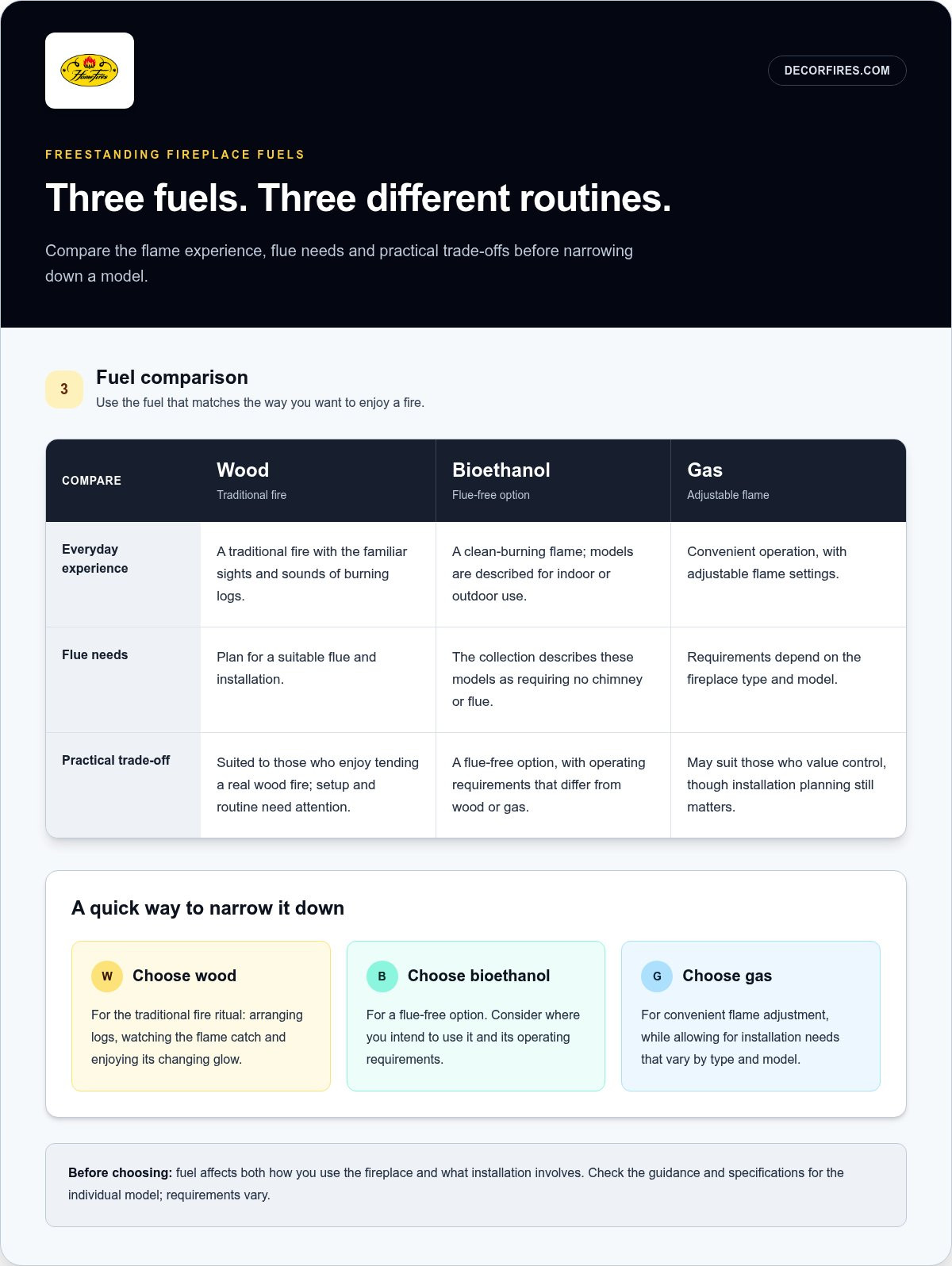
Fuel shapes more than the flame. It influences the daily ritual, installation planning and the convenience you can expect. Use this overview to narrow down which fuel best suits your routine, then compare individual freestanding fireplace models using their own specifications.
| Fuel | Everyday experience | Flue needs | Practical trade-off |
|---|---|---|---|
| Wood | A traditional fire with the familiar sights and sounds of burning logs. | Plan for a suitable flue and installation. | Suited to those who enjoy tending a real wood fire; the setup and routine need attention. |
| Bioethanol | A clean-burning flame, with models described for indoor or outdoor use. | The collection describes these models as requiring no chimney or flue. | A flue-free option, with operating requirements that differ from wood or gas. |
| Gas | Convenient operation and adjustable flame settings. | Requirements depend on the fireplace type and model. | May suit shoppers who value control, though installation planning still matters. |
When a wood-burning freestanding fireplace suits your routine
Choose wood if you’re drawn to the hands-on pleasure of a traditional fire: arranging logs, watching the flame catch and enjoying its changing glow as the evening unfolds. The experience is part of the appeal, not simply a way to switch on warmth. A wood-burning model needs careful thought about flue arrangements and installation, so weigh those practicalities alongside the appliance’s appearance.
For another perspective on the differences between wood and gas, explore this wood stove versus gas fireplace comparison. Include the installation guidance for your chosen fireplace in your planning, as flue and setup requirements vary by model.
When bioethanol or gas may fit better
If you want to avoid planning for a chimney or flue, bioethanol may be an appealing alternative. The collection describes its models as clean-burning and suitable for indoor or outdoor use. Consider how and where you intend to use the fireplace, as operating requirements differ from those of other fuels.
Gas may suit a household looking for a convenient way to enjoy a flame, with adjustable settings offering control over its presentation. Installation needs vary by type and model, so don’t assume a gas fireplace has the same requirements as a bioethanol unit. As a starting point, choose wood for the traditional fire ritual, bioethanol for a flue-free option, and gas for convenient flame adjustment. Once you know which experience appeals, browse the freestanding fireplace collection with your preferred fuel in mind.
Match fireplace heat output, dimensions and placement to your room
A fireplace can be a beautiful centrepiece, but choosing well means matching its specifications to the room and the way you plan to use it. Treat kW, dimensions and flue details as comparison points, then consider how your home’s layout and insulation may affect the experience. A fireplace’s stated output is a useful guide, but room conditions shape how that warmth is felt.
Use heat-output figures as a comparison tool
Assess the room in sequence before comparing models:
- Measure the room. Note its length and width, and consider ceiling height to get a clear picture of the space.
- Look at the layout. An open-plan area, adjoining rooms or frequent movement between spaces can affect how heat is experienced compared with a more enclosed room.
- Consider insulation. Think about how well the room retains warmth, rather than relying on floor area alone.
- Decide the heating role. Clarify whether you want supplementary warmth in one room or expect the fireplace to play a larger part in your home’s heating.
Output is stated in kilowatts (kW), giving you a useful basis for comparing models. If a listing provides both nominal and maximum performance, read them as distinct specifications rather than assuming the maximum is the appliance’s everyday output. For example, the DOVRE VINTAGE 35 is listed with a nominal performance of 7 kW and a maximum performance of 9 kW. These figures describe the model; they don’t guarantee the same warmth in every home. For more guidance on sizing, see the closed-combustion fireplace heat-output guide.
Check the practical fit before shortlisting
Once you understand the room and its heating role, check whether the appliance can fit comfortably in the intended position. Measure the available footprint and compare it with the listed dimensions. Leave the surrounding space functional rather than planning only for the unit itself.
Compare other details where they’re provided. A model’s flue outlet position and diameter can inform installation planning, while its weight is another practical specification to consider for the proposed location. Don’t assume these details are the same across models. A difference in outlet position or overall size can affect how well a fireplace suits your planned layout.
Placement flexibility doesn’t remove the need for careful installation planning. Follow the guidance for the specific model, including its required clearances, and consider its position in relation to walls, furnishings and the route for its flue where applicable. A useful shortlist balances the room’s proportions, the fireplace’s listed specifications and installation conditions. That way, you can compare freestanding fireplaces on fit as well as appearance.
Freestanding fireplace models to compare in the collection
There isn’t one model that suits every room or routine, so start your shortlist with what matters most to you. If you’re comparing stated heat output, two wood-burning examples offer figures to consider. If you prefer a different fuel, bioethanol and gas options broaden the choice. Treat each specification as model-specific and compare like with like, rather than assuming every fireplace shares the same features.
Wood-burning models for shoppers comparing stated output
DOVRE VINTAGE 35 is listed with a nominal performance of 7 kW and a maximum performance of 9 kW. These figures offer a point of reference for comparing its stated output, but they don’t establish how warm it will feel in a particular home. Room conditions and the intended heating role still matter.
KRATKI K7 has a stated heat-output range of 5-8 kW and a listed heating capacity of 60 m². This gives you both an output range and a room-area figure for an initial comparison. Neither figure guarantees that the model will suit every room of that size. Layout and insulation also influence how warmth is experienced.
Compare these details alongside each model’s dimensions and other listed installation information, rather than choosing on output alone. The figures describe the individual models, not a promise of identical results across different homes.
Bioethanol and gas options for different priorities
Kratki Romeo is a bioethanol example in the collection. Use it as a starting point for exploring this fuel category, then compare the model’s listed specifications. At collection level, bioethanol models are described as clean-burning and suitable for indoor or outdoor use, without requiring a chimney or flue. These are general collection descriptions, not specifications to apply automatically to every individual model.
Kratki Patio M is a gas example from the collection. The wider gas range is described as offering adjustable flames and convenient operation, but those category-level qualities aren’t a full specification of this particular model. Compare each fireplace’s details individually, including its fuel and installation information, before deciding whether it fits your space and intended use.
Use this shortlist to organise your comparison: DOVRE VINTAGE 35 and KRATKI K7 are examples for assessing stated wood-model output, Kratki Romeo represents a bioethanol option, and Kratki Patio M is a gas example. For your next step, compare freestanding fireplace models in the collection against your room needs and preferred fuel.
How to shortlist and buy the right freestanding fireplace
A thoughtful shortlist turns an appealing design into a practical choice for your home. Work through the decisions in order: settle on the fuel that fits your household, assess the room, compare each model’s details, then narrow your options by appearance. This keeps a striking silhouette from distracting you from the requirements that will shape everyday use.
A practical final-check list before choosing
- Choose your fuel. Consider the fire experience and routine you prefer, along with the installation planning associated with wood, bioethanol or gas.
- Assess the room. Note the intended position, available floor space and the role you want the fireplace to play.
- Compare specifications. Review the model’s listed dimensions and output figures, where supplied, in light of your room plan.
- Review installation details. Read the specific model’s flue information and installation guidance, including any clearance requirements.
- Shortlist suitable models. Compare options that align with your fuel preference, room and practical requirements, then consider which style feels right at home.
Before deciding, review each product listing for its model-specific details. Specifications can differ between models, even within the same fuel category, so don’t assume dimensions, output or installation information carries across a whole range.
Three common missteps are easy to avoid: choosing on appearance alone, overlooking the unit’s footprint, or treating a stated heat output as a guarantee of how warm your room will feel. Keep your room plan and product details beside you as you compare. Let design complete the decision rather than lead it.
Browse the freestanding fireplace collection
With your shortlist taking shape, compare the wood-burning, bioethanol and gas options in the Decor Fires collection. Explore models by fuel and weigh their listed details against your home’s needs, without assuming one style or specification will suit every space.
As you make your final choice, look for a fireplace that brings the style you love together with a considered fit for your room and routine. Browse freestanding fireplaces and compare the options for your home.
Make room for a fireplace that feels like yours
Choosing among freestanding fireplaces is a chance to think about the atmosphere you want to create at home as well as the practical needs of your space. Picture an ordinary evening: where would you like to sit, gather or unwind, and how might a fireplace bring that corner of the room to life? That image can help you decide which models deserve a closer look.
Before making your final choice, keep your room measurements and shortlist together as you explore the collection. Revisit the details that matter most to your household, and let them guide your decision rather than feeling rushed by a striking design. A considered choice can bring character to your home and make quiet evenings or shared gatherings feel more inviting.
Browse the freestanding fireplace collection to compare styles for your home and find your next fireplace.
Frequently Asked Questions
Can a freestanding fireplace heat more than one room?
Warmth may reach adjoining spaces, but a fireplace’s performance across rooms depends on the home’s layout and the appliance’s position. A unit in an open-plan living and dining area has a different setting from one in a separate room behind a closed door. Treat the listed heating information as applying to the model, not as a promise that heat will spread evenly throughout your home.
Do all freestanding fireplaces need a chimney or flue?
No. The bioethanol models in the Decor Fires collection are described as requiring no chimney or flue, while requirements for other fuels depend on the specific fireplace. Don’t infer a model’s setup from its fuel category alone. Read its product information for flue details and consider how those requirements relate to your room and planned installation.
Are bioethanol fireplaces suitable for outdoor use?
The collection describes bioethanol fireplaces as suitable for indoor or outdoor use, so they may suit an outdoor living area. Suitability can still depend on the particular model and how you intend to use it. Review the product’s information and placement guidance to make sure it matches your setting.
Can I move a freestanding fireplace after installation?
Don’t assume an installed fireplace can simply be moved like a piece of furniture. Its fuel supply, flue arrangement and installation requirements may affect whether relocation is practical and what work it involves. Before changing its position, consult the instructions for that model and plan for it to be installed appropriately in its new location.
Can a freestanding fireplace be the main heat source in a home?
It may contribute substantially to heating, but whether it can serve as your home’s main heat source depends on the model and the home. Consider the areas you want to warm, how the rooms connect and the fireplace’s stated heating information. A single appliance may not provide the same comfort throughout rooms with different layouts or use patterns, so base expectations on your household’s needs.
What does a fireplace’s kW rating tell me?
A kW rating states the fireplace’s heat-output specification, giving you a useful figure for comparing models. It doesn’t predict exactly how warm your home will feel, since the room and its layout affect the experience. Read the wording carefully: a listing may give a range or distinguish between nominal and maximum output. Those figures describe that model, not every fireplace.
Is a freestanding fireplace a good choice for a smaller home?
It can be, provided the chosen model suits the room and its installation needs. In a compact home, measure the available floor area and consider how the appliance will sit alongside furniture, walkways and the room’s main activities. A strong visual presence can make a small space feel welcoming, but use the listed dimensions and required placement clearances to guide your shortlist.